Nepali origin Deepak Basnet in local politics in Colorado : Aiming to bring the voices of immigrants into the policy-making process
In the election on November 3, voters in Erie Town Council District 2 will select their representative. Through his candidacy, Basnet aims to contribute to local development, incorporate the voices of immigrants into the decision-making process, and increase the active participation of the Nepali community in mainstream American politics.
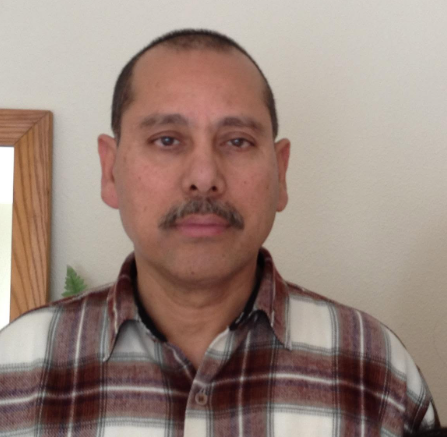
By Nati Babu Bhatta, COLORADO:- Deepak Basnet, a person of Nepali origin, has become active in local politics in the U.S. state of Colorado and is running as a candidate for District 2 of the Erie Town Council.
Basnet stated that he has entered the electoral race with the objectives of encouraging young people to engage in politics, advocating for the rights and interests of the immigrant community at the policy-making level, establishing the identity of Nepal and the Nepali people in his adopted home, and contributing to the development of his local neighborhood and community.
With a focus on the election to be held on November 3, Basnet has prioritized local development, family-friendly communities, safe neighborhoods, and accountable leadership. He has stated that he views his candidacy not as a pursuit of personal political ambition, but rather as an opportunity for community leadership and a chance to contribute through public service.
Basnet holds the view that Nepalis living in the United States—thousands of miles away from Nepal—should maintain their love for and connection to their homeland while also playing an active role in the development of the society in which they reside.
He noted that he reached the conclusion long ago that focusing exclusively on politics centered on the homeland while living abroad makes it difficult to make the expected contribution toward the policy-making and development processes of the local society where one resides.
He argues that as the Nepali community in the United States continues to grow, it is essential to understand the local political process, participate in public decision-making, and work toward increasing immigrant representation among elected leadership.
According to Basnet, the objective of entering politics is to encourage Nepali youth to pursue public service, convey the challenges and needs of immigrants to the relevant authorities, and enhance the community’s participation in local development initiatives.
While living in Aurora, Basnet participated in social initiatives alongside various friends from the Nepali community. He recalls collaborating with individuals—including Ganga Chaulagai, Dr. Sudip Pyakurel, Basudev Dahal, Yograj Gautam, Raj Dhungana, and Gyanendra Gadhal—to carry out various social activities.
He mentioned that discussions also take place regarding the participation of the Nepali community in local politics as part of efforts to work for the community’s welfare. He stated that while remaining active in the social sphere, he began to consider the possibility of entering the American political system to ensure the community’s voice reaches the decision-making process.
 Basnet stated that he was further inspired after having the opportunity to participate in an election-related event alongside Anwar Ahmed, an Indian-American citizen. He noted that, upon witnessing the political participation and influence of Indian-Americans at that event, he realized the need for the Nepali community to also increase its presence in local politics.
Basnet stated that he has decided to run in the Erie Town Council election with the aim of putting into practice the experience and insights he has gathered while living in this region since 1998.
America serves as a common home and workplace for immigrants arriving from various countries. Basnet believes that the needs of the immigrant community must be addressed in local development, public services, and policy-making processes.
He aims to foster collaboration among the Nepali-speaking community, immigrants from various countries, and local residents. He has stated that he intends to play a role in bringing issues—such as the challenges faced by immigrants, their social participation, and their contributions to local development—into the spheres of public debate and policymaking.
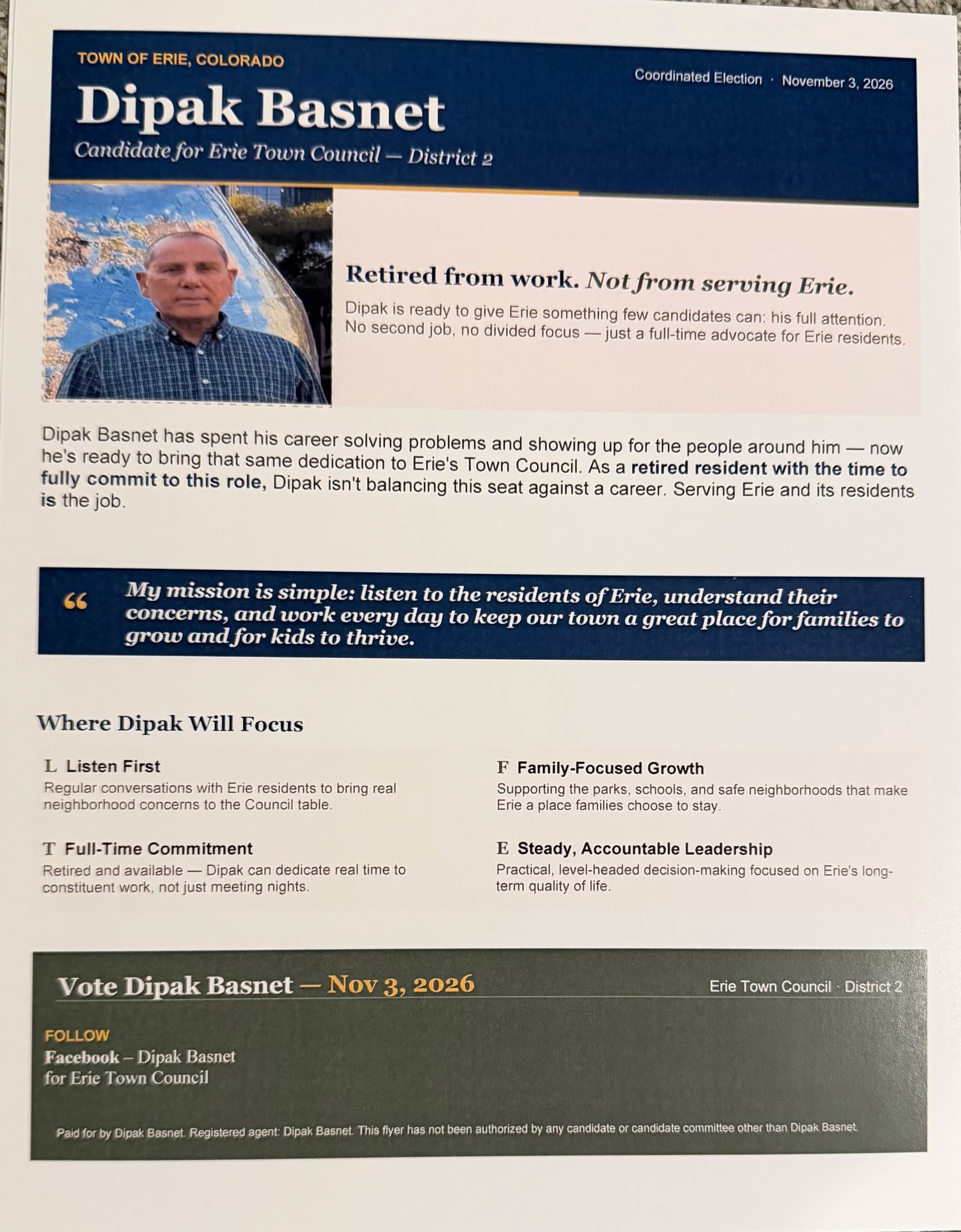
His campaign materials include commitments to engage in regular dialogue with the residents of Erie, listen to their genuine concerns, prioritize the development of parks, schools, and safe neighborhoods, and make decisions with a focus on long-term interests.
Basnet has stated that, as he is retired, he would be able to dedicate ample time to the community if elected. He emphasizes that his primary focus is to understand the needs of Erie’s residents and to contribute consistently to the town’s development.
According to Basnet, three candidates are competing for the District 2 seat on the Erie Town Council. He notes that while there are approximately 10,000 voters in this district, the number of Nepali-speaking voters is only around 150.
Despite the relatively small number of Nepali-speaking voters, he has placed significant emphasis on the organized participation of the community, engagement with local residents, and collaboration with various immigrant communities.
He has stated that his candidacy is focused on addressing the shared concerns not only of the Nepali community but also of all local residents and immigrant communities.
As the election approaches, Basnet has reached out to the Nepali-speaking community, immigrants from various countries, and local residents to inform them about his candidacy and to request an opportunity to contribute to local development.
He has requested members of the Nepali community to extend their support by spreading the word about his candidacy through their neighborhoods, workplaces, businesses, social gatherings, and social media networks. Similarly, Dr. Bijayraj Sharma and Narayan Shrestha—social activists and long-time residents of Colorado—have expressed their appreciation for Basnet, a member of the Nepali-speaking community, for taking such a bold and courageous step in the political history of Colorado; they have also urged everyone to offer their support and cooperation.
While Nepali speakers have already made significant strides in politics in states like Maryland, New York, Virginia, and Texas, this marks the first such step for the Nepali-speaking community in Colorado.
Various organizations within the Nepali community in the United States are active in social, cultural, and institutional endeavors. The elections, leadership selection processes, and collective decision-making within these organizations provide community members with opportunities to engage in democratic practices.
In Colorado, organizations such as the Nepali Cultural Center—’Nepali Ghar’—have been laying the groundwork for leadership development and collective engagement through community activities. Bridging the experience gained from leadership roles within these social organizations to local government elections, public policy, and civic participation could help expand the representation of the Nepali community.
Upon arriving in the United States, many first-generation Nepali immigrants focused on employment, business, family stability, and financial security. Consequently, they often had limited time and opportunities to engage in local politics. Now, however, individuals across various generations—including youth of Nepali origin—have begun to take an interest in civil rights, public services, policymaking, and participation in local elections.
 However, political participation is not limited to any single generation. Basnet’s candidacy has brought to the fore the possibility for Nepalis of various generations to develop leadership by integrating the experience gained in the social sector with local political processes.
Noting that he is currently in his post-retirement phase, Basnet has expressed a commitment to dedicating this period of his life to societal development and public service.
His campaign materials prominently feature the message: “Retired from work, but not from serving Erie.” He has pledged to listen to the residents, understand their concerns, and contribute to developing Erie into a suitable place for families to live and raise their children.
Basnet’s candidacy highlights the participation of individuals of Nepali origin in local American politics, the representation of immigrant communities, and the integration of community leadership with public service.
In the election on November 3, voters in Erie Town Council District 2 will select their representative. Through his candidacy, Basnet aims to contribute to local development, incorporate the voices of immigrants into the decision-making process, and increase the active participation of the Nepali community in mainstream American politics.