Immigration Update
Suspended immigrant and diversity visas begin to be issued
On September 10, U.S. District Court Judge Edward J. Davila of the Northern District of California ordered the State Department to submit reports three times a week regarding efforts to resume the Diversity Visa process.
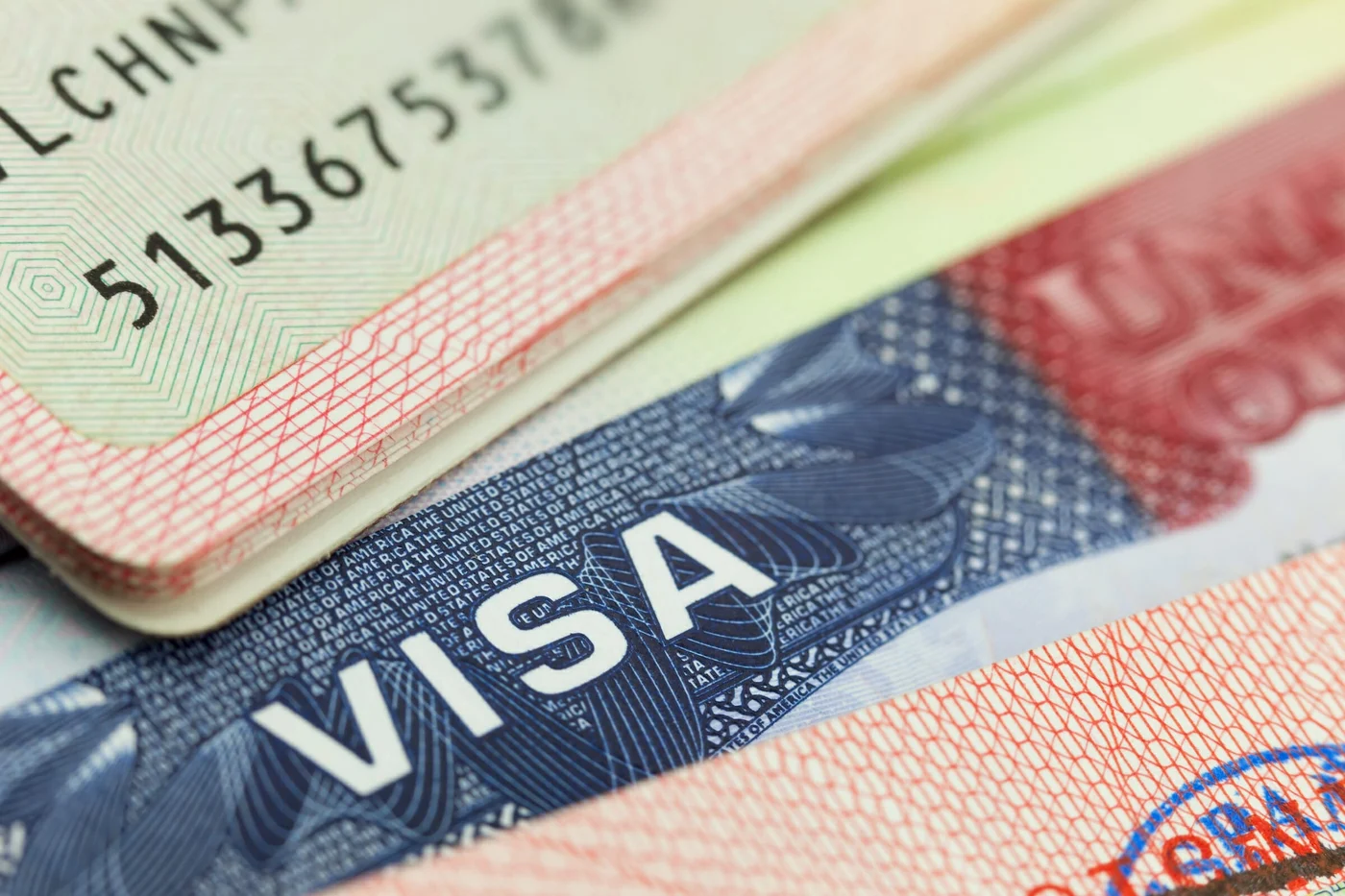
LOS ANGELES:-Following a directive from the US State Department, US embassies and consulates worldwide—including the one in Kathmandu—have resumed processing immigrant and Diversity Visa (DV) cases for citizens of the 75 countries previously subject to restrictions and have begun issuing visas to eligible applicants. Although reports of visas being issued by some embassies have surfaced, there has been no official confirmation yet that the US Embassy in Kathmandu has started summoning affected Nepali applicants or issuing visas to them.
On September 10, the U.S. State Department informed U.S. embassies and consulates worldwide that the previously implemented suspension on the issuance of immigrant and diversity visas was no longer in effect. The Department directed that cases refused solely due to those suspensions under Section 221(g) of the Immigration and Nationality Act be identified and re-reviewed.
This paves the way for embassies to review applications stalled due to the suspension, request missing documents, conduct new interviews if necessary, and issue visas to applicants deemed eligible under U.S. law.
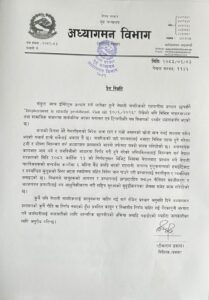
In a directive issued on September 10, the Ministry of Foreign Affairs announced the complete revocation of the previously implemented directives suspending the issuance of immigrant and diversity visas.
Under the directive, consular officers can no longer deny applications under Section 221(g) based on those restrictions. This directive was formally filed on September 11 in a case pending before the U.S. District Court for the Northern District of California.
This directive follows orders from two separate federal courts. On August 21, the U.S. District Court for the Southern District of New York—in the case of *Catholic Legal Immigration Network v. Rubio*—struck down the ban on immigrant visas that affected 75 countries, including Nepal. Subsequently, on August 28, the U.S. District Court for the Northern District of California—in the case of *Medani v. Trump*—overturned the suspension of the diversity visa process.
Citizens of 75 countries, including Nepal, were affected by the previous policy suspending immigrant visas. Among those impacted were Nepalis selected for the Diversity Visa for the 2026 fiscal year, individuals planning to move to the U.S. for permanent residence based on family ties, and applicants undergoing the employment-based immigrant visa process.
The State Department has instructed every U.S. embassy and consulate to immediately identify cases that were refused solely due to the Diversity Visa ban or the immigrant visa ban affecting 75 countries.
Fiscal Year 2026 cases refused on or after December 20, 2025, due to the Diversity Visa ban, and immigrant visa cases refused on or after January 21, 2026, due to the immigrant visa ban, will be re-reviewed in chronological order.
Before reviewing other factors related to the case, the consular officer must first overcome the prior refusal under Section 221(g) that was based on the suspension policy. Subsequently, the officer will evaluate the applicant’s general eligibility.
If necessary, the embassy may contact the applicant in writing to request additional documents or the completion of further procedures. These may include an updated medical examination; missing citizenship, marital, or financial documents; details required for additional security or background checks; a new in-person interview; and information needed to assess financial self-sufficiency and the likelihood of requiring public assistance.
The lifting of the ban does not mean that all affected applicants will automatically be granted a visa. Officials may still suspend a case under Section 221(g) for reasons such as the expiration of medical exam validity, pending security checks, missing documentation, or other personal ineligibility. However, the previous ban policy cannot be cited as the basis for a new refusal; the reason for refusal must be clear, individualized, and specific to the case at hand.
According to information shared on social media, an immigrant visa has been issued to an applicant who was previously affected by a visa hold at the U.S. Embassy in Kingston, Jamaica; the embassy notified the applicant to visit the visa section to collect the visa. Publicly available details indicate that the final update on the case occurred on September 11, 2026.
According to the applicant, during the re-review, the officer paid particular attention to questions regarding their potential for financial self-sufficiency upon arrival in the United States and the likelihood of needing to rely on public assistance. The questions covered the applicant’s financial situation and sources of support, plans for employment upon arrival in the U.S., arrangements for health insurance and access to healthcare services, the employment status of the petitioner or sponsor in the U.S., whether the sponsor has utilized public benefits such as food assistance programs, housing arrangements, and the feasibility of entering the U.S. before the medical examination expires.
The applicant reported seeing another individual being asked for additional tax-related documentation at the same embassy. He claims that most of the applicants he observed were granted visas. However, this account has not been independently verified by the U.S. government. Consequently, legal experts state that one cannot conclude this same procedure applies at every U.S. embassy or that all affected individuals will be recalled for a follow-up interview.
In the case, the court ordered a reconsideration of the applications of affected Diversity Visa selectees and their dependent beneficiaries for the 2026 fiscal year. The court directed the State Department to review—in good faith and as soon as possible before the end of the fiscal year—cases that had been denied solely due to the suspension, and to proceed with the standard processing.
A new directive from the State Department instructed embassies to prioritize Diversity Visa applicants for the 2026 fiscal year whose interviews had been scheduled between August 23 and September 30 but subsequently postponed. Embassies are required to provide these applicants with written notification regarding the necessary documents and the new interview details.
Time is extremely limited for Diversity Visa-2026 applicants. By law, Diversity Visas must be issued within the relevant fiscal year. Fiscal Year 2026 is set to conclude on September 30, 2026—in just under two weeks. If the process is not completed before then, applicants risk not receiving the visa, even if they were selected for the program.
On September 10, U.S. District Court Judge Edward J. Davila of the Northern District of California ordered the State Department to submit reports three times a week regarding efforts to resume the Diversity Visa process.
The court expressed concern that, even after the August 28 order, Diversity Visa interviews had not been scheduled and visas had not been issued for more than a week. The State Department is required to submit status reports by 12:00 PM (Pacific Time) every Monday, Wednesday, and Friday from September 14 to September 30.
Those reports must include details regarding the number of immigrant visa interviews scheduled or conducted, as well as the number of diversity visas issued or denied, during the period following the previous report.
The Department of State has announced that some immigrant visa interviews may need to be rescheduled due to global consular training taking place since August. The Department stated that affected applicants will be notified via email once new dates become available.