Demands for various forms of citizenship by Nepalis living abroad have complicated the process: Manish Jha
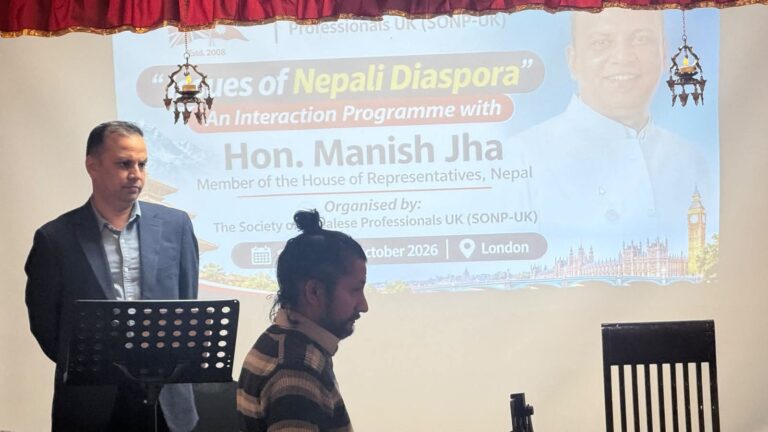
LONDON:- Manish Jha, a member of the House of Representatives and head of the Foreign Affairs Department of the Rastriya Swatantra Party (RSP), has stated that the process of resolving citizenship-related issues has become complex due to the diverse and varying demands coming from Nepalis living abroad.
Speaking at an interactive program held on Saturday in Plumstead, South-East London, Jha noted that it has become difficult to address the citizenship-related demands of Nepalis scattered across various foreign countries because these demands lack uniformity.
According to him, while some are demanding dual citizenship, others are seeking citizenship by descent, and some are looking for rights related to Non-Resident Nepali (NRN) citizenship. He noted that the emergence of such diverse demands regarding the same issue has made it more challenging to identify a common path toward a solution.
Responding to queries raised by participants regarding issues long advocated for by Nepalis living abroad—such as citizenship and the double taxation system—Jha stated that they hold a clear position on these matters. Noting that the work concerning citizenship, in particular, has reached its final stages, he expressed confidence that concrete progress would be made on this front soon.
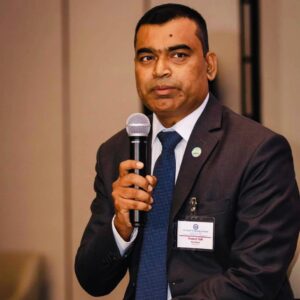
Participants in the interaction raised questions on various contemporary issues. Jha responded to the questions in both Nepali and English. During the session, he urged people not to immediately believe all information appearing on social media or in certain media outlets.
Citing a claim published in a newspaper a few days ago—which suggested that an official could claim the driver’s salary as part of their own expenses while driving a vehicle—he emphasized that one should only trust information or claims after verifying their accuracy through reliable sources.
Participants noted that Jha, who has previously been associated with fact-checking organizations, placed particular emphasis on the necessity of verifying the credibility of any information or claims.
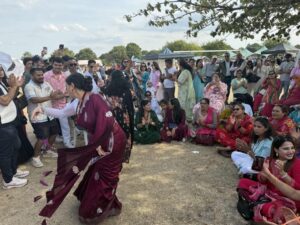
Another notable feature of the event was its simple and intimate presentation. Eschewing traditional formalities—such as the offering of *khadas* (ceremonial scarves) and garlands—the interaction concluded with participants enjoying Nepali cuisine served on *taparis* (traditional leaf plates).
During the interaction held in Plumstead, participants raised keen questions regarding various topics, including citizenship, the rights of Nepalis living abroad, the tax system, and overall relations with Nepal.