Government’s illegal actions have crossed the limit, we will not remain silent anymore: Gagan Thapa
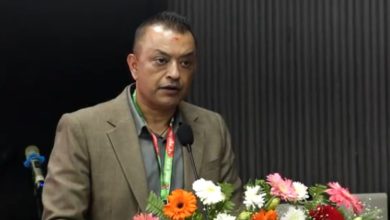
LALITPUR:- Nepali Congress General President Gagan Thapa has stated that the government’s unlawful actions have crossed all limits, warning that the Nepali Congress will not remain silent if there is any interference with democracy, civil rights, or press freedom.
Speaking at a press conference held at the party office in Sanepa, Thapa expressed strong objection to an incident in which police entered a media outlet and arrested a journalist. He emphasized that the police entering a media house and arresting a journalist—solely on the grounds of a published news report—is a matter of serious concern.
He stated that interference with press freedom, civil rights, and democratic values should not be taken lightly. He emphasized that while the Congress party is prepared to support the government when necessary—and stand by it during times of national crisis—it will oppose any misguided actions taken by the government that undermine democracy or civil rights.
Thapa stated that the incident involving the arrest of journalists brings to mind the entry of security personnel into media houses during the royal regime. He noted that although the arrested journalists were released following public pressure, the matter should not be reduced merely to the arrest of a few journalists.
Thapa said, “We witnessed police entering certain media houses and arresting journalists based on news reports that had been published. This incident reminded us all of an unpleasant event from a few years ago—it brought back memories of the royal regime, a time when security personnel entered media houses.Following this incident, there was an outcry and questions were raised, which eventually led to the release of the fellow journalists. Some were arrested and subsequently released—is that the end of it? The Nepali Congress holds the view that it does not—and should not—end here.”
He stated that this incident has raised serious questions about how the government perceives the state, its own authority, the fundamental rights of citizens, freedom of expression, and freedom of the press. He remarked that it is difficult to believe the police entered the offices of media outlets without directives from the political and administrative leadership.
Thapa stated that some individuals within the government have begun to view state institutions as offices meant to carry out their personal directives—a tendency he described as the arbitrary exercise of power. “In a democracy, the government possesses authority, and we acknowledge that. That is precisely why we comply with the government’s directives. But where does the government’s authority originate? Law originates from the law itself. But problems arise when those in government begin to believe that their own personal will—’my will is the law’—is what constitutes the law. That is exactly what is happening now,” he said.
He urged the media, civil society, and political parties not to normalize the trends observed in the government’s style of functioning. Emphasizing that the government must exercise its authority within legal limits, Thapa stated that the Congress party would consistently raise questions regarding democracy, civil rights, and press freedom—and, if necessary, would oppose and resist such actions.