Trend of people going abroad for work did not stop even during Dashain
KATHMANDU:- Even during Bada Dashain—the primary festival for Nepalis—the trend of heading abroad for employment, studies, or other purposes continues.
At a time marked by the joy of Dashain, family reunions, and the busy preparations for receiving *tika* and *jamara* from elders, hundreds of young Nepali men and women are departing for foreign lands with the goal of building their futures and improving their families’ financial situation.
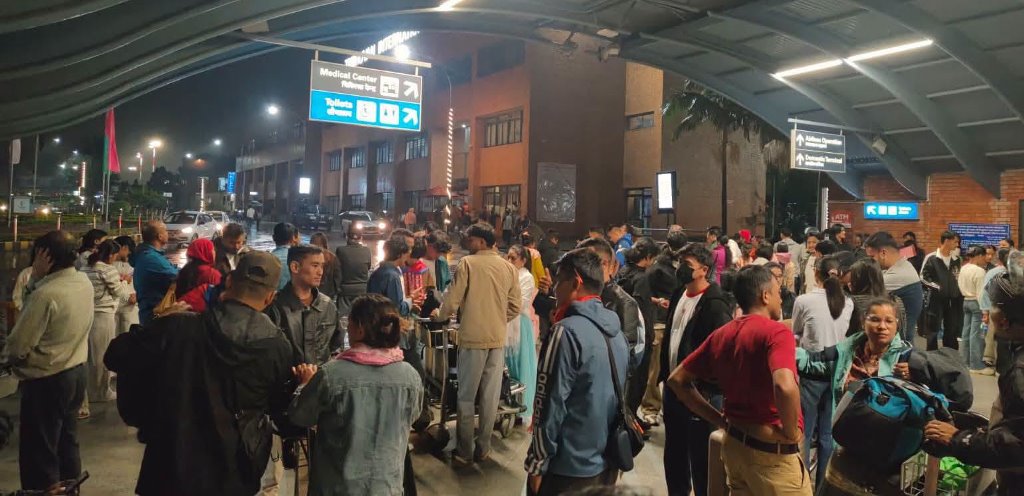
Today, Tribhuvan International Airport in Kathmandu remains as crowded as ever with passengers heading abroad. Among the Nepalis departing for various countries through the airport, the majority appear to be young men and women seeking employment overseas. Additionally, others can be seen traveling abroad to pursue higher education, visit family members, or attend to various personal matters.
It is a Nepali tradition to spend time with family during festivals, sharing joy, meeting with relatives and friends, and receiving blessings from elders. However, in recent years, the number of young people heading abroad in search of employment, economic opportunities, and a brighter future has been on the rise.
The crowds of young people seen at the international airport reflect the changing economic and social landscape of Nepali society. Driven by a widespread tendency to seek opportunities abroad—forsaking education and employment prospects within their own villages, towns, and cities—many rural areas have been left deserted, with farmlands lying fallow.
Meanwhile, Lakhan Kumar Yadav from Siraha, who is preparing to go abroad for employment, stated that he was compelled to leave the country due to a lack of sufficient job opportunities in Nepal. He remarked, “Had there been a guarantee of finding work in my own country that matched my qualifications and capabilities, I would not have wanted to leave my family and head abroad right in the middle of the Dashain festival. I am going abroad for the sake of my own future and that of my family.”
He states that young Nepalis go abroad with the aim of managing their families’ daily lives—including covering education and healthcare expenses—improving their economic situation, and saving for the future.
Prakash Khatri from Gulmi, whom we met at the airport, explains that because sufficient employment opportunities are not created within the country, the younger generation chooses to go abroad to build their future.
“Given the lack of employment opportunities in Nepal—or the poor pay and benefits where such opportunities do exist—and observing that those who go abroad (with few exceptions) tend to improve their economic, educational, and social standing, the situation is such that people are compelled to choose life abroad for the sake of a brighter future, rather than focusing on celebrating festivals,” he said.
Similarly, Thakkar Kalel from Kailali—who had come to the airport to see his son off to a foreign country—notes that while foreign employment helps improve a family’s financial situation and standard of living, the departure of the nation’s active workforce could create long-term challenges for the country.
He expresses concern that the migration of skilled and hardworking youth abroad could lead to a shortage of the necessary workforce in sectors such as agriculture, industry, construction, tourism, and manufacturing.