Preparations for a new power equation in Madhesh after UML withdraws support to the government
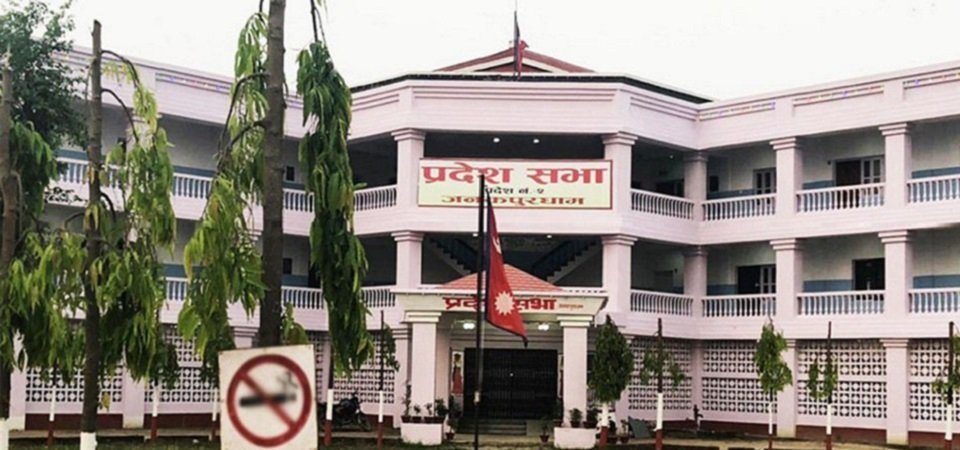
MAHOTTARI:- Following the CPN (UML)’s withdrawal of support for the government in Madhesh Province, efforts to forge a new political alignment have intensified. With the current government reduced to a minority, discussions are underway among the CPN (UML), the Janata Samajbadi Party Nepal (JSP Nepal), and the Janamat Party regarding the formation of a new coalition government.
Leaders from the three parties have stated that discussions regarding the formation of a new government are underway. However, no final decisions have been reached concerning a formal coalition agreement, the selection of the Chief Minister, or the allocation of ministerial portfolios. Although the arithmetic of the Provincial Assembly suggests a favorable environment for forming a new government, reaching a consensus on leadership remains the primary challenge for the three parties.
Having withdrawn from the current government—led by Krishna Prasad Yadav of the Nepali Congress—the CPN-UML has initiated preparations to form a new government in collaboration with the JSP Nepal and the Janamat Party.
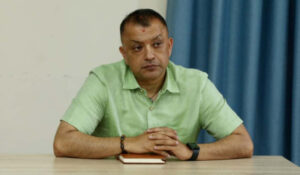
Saroj Kumar Yadav, leader of the CPN-UML’s parliamentary party in Madhesh Province, stated that the party withdrew its support because the agreements reached upon joining the government were not implemented, and because public dissatisfaction with the government’s performance has been growing.
According to him, the decision to withdraw from the government was taken because the agreement had not been implemented, even four to five months after the UML joined the government. He also cited the fact that the public has not felt the expected impact from the government’s actions as a reason for withdrawing support.
“The agreements reached upon joining the government have not been implemented. The public is also complaining that they cannot feel the impact of the government’s work,” said Yadav. “Discussions have now been initiated with other parties to forge a new political alternative in the province.”
According to UML leader Yadav, one round of discussions has already taken place at the central level between party chairman KP Sharma Oli and JSP Nepal chairman Upendra Yadav regarding the formation of a new government. He claims that these discussions were positive. He further informed that dialogues are also underway with JSP Nepal and the Janamat Party at the provincial level.
He stated that although efforts are underway to reach an agreement among the three parties, it cannot be said that a conclusion has been reached until a concrete understanding is solidified—given the past tendency of parties to back away from agreements they had previously made. He added that initiatives will be taken to bring the discussions to a conclusion once the festive season has passed.
As discussions regarding the formation of a new coalition continue, the question of who will secure the position of Chief Minister is becoming increasingly contentious. The Janata Samajbadi Party (JSP) Nepal has staked a claim to lead the government, arguing that it is the largest party in the Provincial Assembly.
Saroj Kumar Yadav, the parliamentary party leader of JSP Nepal, stated that discussions are underway to form a new government involving the CPN-UML, JSP Nepal, and the Janamat Party. According to him, an understanding has been reached that an agreement will be forged among the chairpersons of the three parties at the central level.
He stated that further discussions regarding the formation of the government will take place once Upendra Yadav, the chairman of JSP Nepal, returns to Kathmandu. He also mentioned that efforts are underway to finalize the government formation process within the next few days.
JSP Nepal argues that its claim to the Chief Ministership is natural, given that it is the largest party in the Provincial Assembly. However, the exact structure of the new coalition remains unclear, as an agreement has yet to be reached with the UML and the Janamat Party regarding the distribution of leadership roles and the responsibilities for running the government.
Should an agreement be reached among the three parties, it would necessitate finalizing not only the selection of the Chief Minister but also the allocation of ministerial portfolios, a common agenda, and the operational modalities for the government. Therefore, the current discussions appear to extend beyond mere government formation, focusing also on defining the structure of the power-sharing arrangement.
In the 107-member Madhesh Provincial Assembly, the support of at least 54 members is required to form a government. According to the seat distribution, the Nepali Congress has 22 members, the UML has 23, JSP Nepal has 27, the Nepal Communist Party has 15, and the Janamat Party has 12. Additionally, the Federal Socialist Party and the Rastriya Prajatantra Party each have one member.
Based on the number of seats, if the UML, JSP Nepal, and Janamat Party come together, their combined total reaches 62. This is eight seats more than the majority required to form a government. Therefore, if an agreement is reached among these three parties, the parliamentary support necessary to form a new government could be secured.
However, the mere arithmetic of parliamentary seats does not guarantee the formation of a government. It is equally essential to reach a formal agreement among the parties, finalize the leadership, and establish a common basis for running the government.
While the current government has fallen into a minority following the withdrawal of support by the UML, the Nepali Communist Party has not withdrawn its support for the government. The process of shifting the provincial power equation began after the UML exited the government on Ashoj 30.
A consensus among the top leadership of the three parties appears necessary to reach a final decision regarding the continuation of the current government or the formation of a new coalition. In particular, the claim by JSP Nepal for the Chief Ministership, along with the stances of the UML and the Janamat Party concerning power-sharing, will be the key factors in determining the shape of any new political alignment.
The UML has stated that its decision to withdraw from the current government stems from the failure to implement agreements and the inability to address the grievances of the public. Should a new coalition be formed under these circumstances, it will face the challenge of establishing a common program and clearly defining the division of responsibilities—ensuring that the shortcomings of the past are not repeated.
While securing a majority to form a provincial government is a crucial aspect of the parliamentary process, the stability and effectiveness of the government ultimately depend on consensus among political parties, their policy priorities, and their capacity for implementation. Therefore, in discussions regarding the formation of a new government, alongside the allocation of ministerial portfolios, it will be equally important to address issues such as provincial development, service delivery, good governance, and the expectations of the public.
Although leaders of the three parties described the discussions as positive, it remains uncertain who will lead the new government and what the structure of power-sharing will look like until a formal agreement is reached. The future political direction of Madhesh Province now appears to depend on the understanding reached among the three parties and the decisions made by their top leadership.