Non-Resident Nepalis fought for their rights for decades: Rojina Pradhan Rai
"Our fundamental belief is that anyone born in Nepal or of Nepali lineage never ceases to be Nepali. Therefore, the continuity of citizenship by descent has been an agenda since our inception."
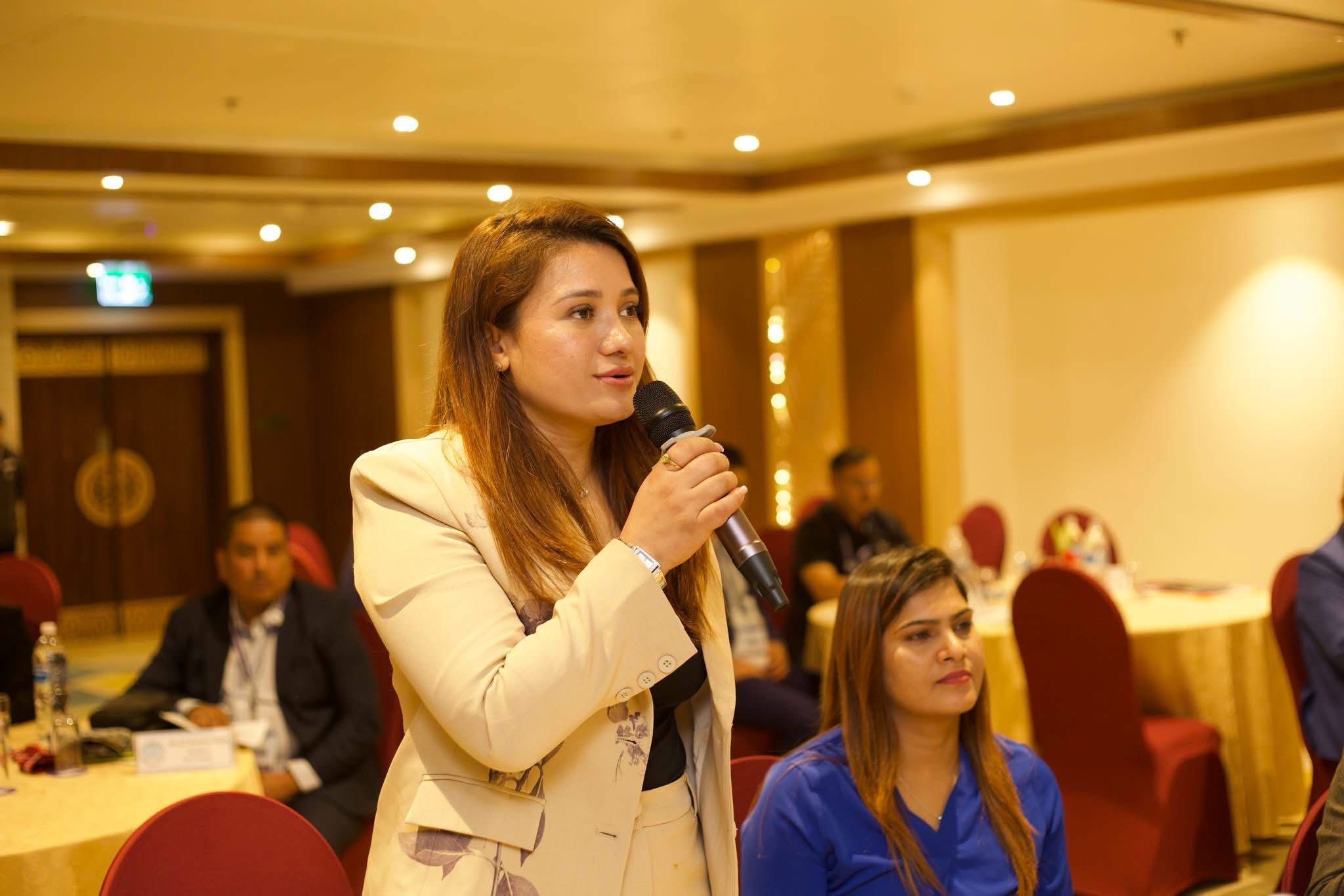
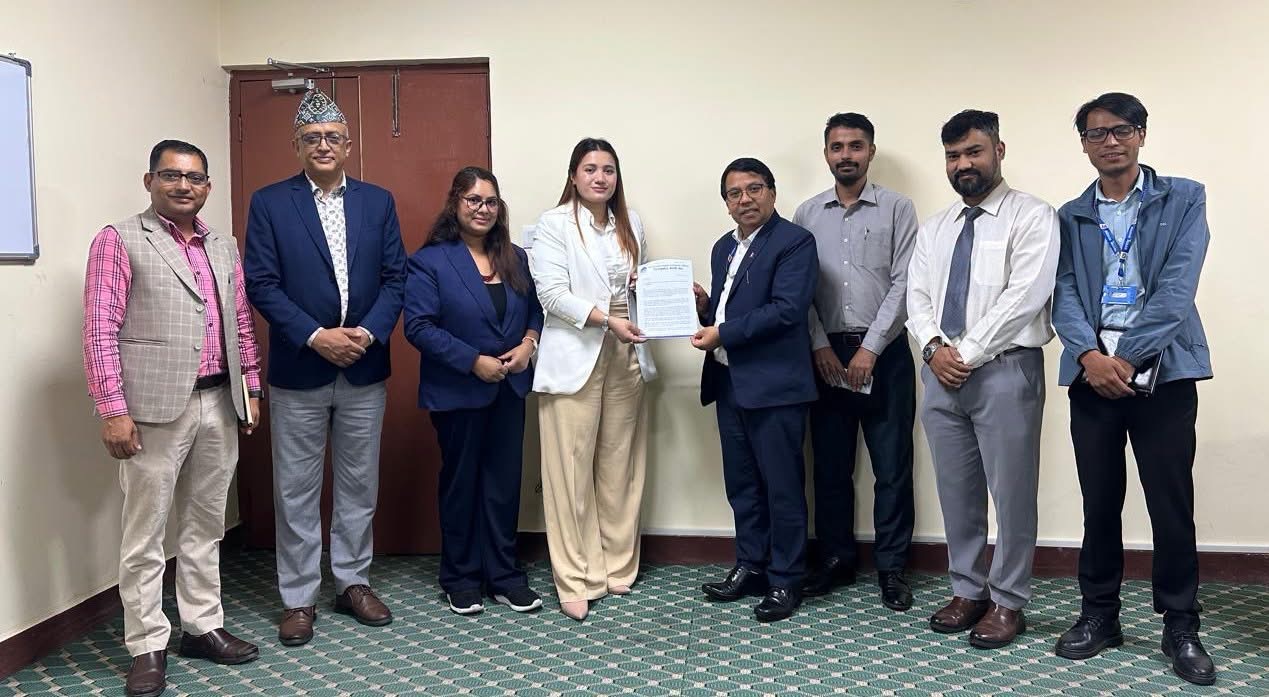
LONDON:- Non-Resident Nepalis are highly optimistic about the government, which commands a near two-thirds majority. They believe that their long-neglected and stalled issues will finally be addressed. Rojina Pradhan Rai, Vice President of the Non-Resident Nepali Association (NRNA), is actively making the rounds in Kathmandu, carrying the files containing these very demands and issues. A team led by Rojina is frequently visiting Singhadurbar to brief and persuade ministers on these matters.
“Many of our issues remain stalled; they are simply circulating on the desks of government bodies. Citizenship is a key issue. We are continuously urging the government to immediately formulate the necessary acts and laws to implement Non-Resident Nepali citizenship in practice,” said Rojina. “Although the Constitution provides for Non-Resident Nepali citizenship—including economic, social, and cultural rights—Nepalis living abroad are still unable to reap the direct benefits due to the lack of a necessary legal framework; we are currently in the process of securing these rights for them.”
According to her, the NRNA has presented its demands to the government in three phases. The demands include implementing measures that can be immediately enforced through a Council of Ministers decision in the first phase, expediting the passage of the bill regarding Non-Resident Nepali citizenship in the second phase, and further constitutionally guaranteeing the concept of “Once a Nepali, Always a Nepali” in the third phase.
She said, “The Constitution of 2072 BS provides for non-resident Nepali citizenship that includes economic, social, and cultural rights. Unfortunately, however, the necessary acts and laws to implement this have not yet been enacted. Until the legislation is in place, the rights granted by the Constitution cannot be put into practice.”
According to Rai, the association has drawn the government’s attention to issues that can be resolved immediately in the first phase. She stated that priority has been given to matters—such as operating bank accounts without a National Identity Card (NID), property transactions, the transfer of ownership regarding inheritance and succession, operating Demat accounts, and purchasing vehicles—because these can be facilitated through a simple Cabinet decision.
She said, “We have submitted a proposal to the government requesting the immediate Cabinet approval of measures allowing for the buying and selling of property, the transfer of titles for inherited assets, the opening of Demat accounts, and the purchase of vehicles.”
She also emphasized the need for the bill regarding Non-Resident Nepali (NRN) citizenship to be passed by Parliament as soon as possible. According to her, detailed discussions were held with NRNA officials regarding the preliminary draft prepared by the Ministry of Foreign Affairs. She noted that they were asked to provide necessary suggestions—without regarding the preliminary draft as final—and that the association subsequently submitted its detailed proposal to the government.
“We were asked for suggestions on the understanding that it was merely a preliminary draft, not the final version. Subsequently, we conducted our own review and submitted a proposal with amendments within five days. It is currently under discussion at the Ministry of Law and other relevant bodies,” she said.
Noting that they had learned of the government’s discussions regarding the introduction of an integrated act, she expressed optimism that the law on non-resident Nepali citizenship would eventually be enacted, even if the process takes a little longer.
 She said, “It is disheartening that there have been delays despite repeated efforts. A ‘100-day program’ was announced and a 12-point decision was issued, yet our issue was not included. Naturally, this has raised questions among Nepalis abroad. However, we remain optimistic because we are receiving positive assurances from the concerned authorities.”
Rai stated that the continuity of citizenship by descent has been a core agenda of the organization since its inception. According to her, the “Once a Nepali, Always a Nepali” campaign is not a new concept but an issue that has been advocated for since the organization was founded.
She said, “Our fundamental belief is that anyone born in Nepal or of Nepali lineage never ceases to be Nepali. Therefore, the continuity of citizenship by descent has been an agenda since our inception.”
>However, she noted that since legal provisions regarding dual citizenship vary across countries, a single model cannot resolve every issue. She pointed out that while nations like the US, the UK, and Canada allow dual citizenship, there are countries—such as Germany—where Nepali citizens must renounce their citizenship to acquire local citizenship
“Where dual citizenship is accepted, maintaining citizenship by descent is straightforward. However, in some countries, one must renounce Nepali citizenship to acquire local citizenship. There should be provisions to preserve the Nepali identity of such individuals as well,” she said.
According to her, Non-Resident Nepali citizenship or an NRN card might be necessary for such individuals. She also stated that a separate identification arrangement needs to be made for people of Nepali origin who migrated abroad many generations ago.
“Even the descendants of Nepalis who went abroad eight generations ago take pride in being Nepali. They remain emotionally connected to the Nepali language, culture, and Pashupatinath. There should be a provision to grant some form of Nepali identity to such individuals as well,” she said.
Noting that Non-Resident Nepalis wishing to invest in Nepal still face significant administrative hurdles, Rai stated that the government needs to be serious about creating an investment-friendly environment. Herself a businessperson, she pointed out that there remain many complexities in the processes of bringing capital into Nepal, investing within the country, and repatriating investment returns abroad.
“I am a businessperson myself. There are still many challenges when investing in Nepal. Bringing in funds is difficult, making investments is hard, and there are various issues involved in repatriating investment returns. That is why we have urged the government to implement a ‘one-door system,'” she said.
Rai stated that connecting the second generation of Nepali origin—those born and raised abroad—with Nepal’s language, culture, and identity is currently one of the NRNA’s top priorities.
According to her, while the first generation of Nepalis is naturally connected to Nepal on an emotional level, institutional efforts are required to foster a similar connection for their children born overseas; consequently, the NRNA is conducting special programs to address this.
She said, “The first generation is naturally connected to Nepal. However, the second generation needs to be familiarized with the language, culture, traditions, and history of Nepal. That has now become our greatest responsibility.”
“We have engaged second-generation youth in the NRNA. We are connecting them with the language, culture, art, and history of Nepal to foster a sense of belonging towards the country,” she said.
According to her, Nepali festivals are regularly organized in various countries, including Japan, the UK, and Scotland. She noted that these events feature Nepali cuisine, traditional attire, language, and cultural performances representing diverse ethnic groups.
Rai stated that the knowledge, skills, and experience gained abroad could become a valuable asset for Nepal. She believes that if Nepali youth educated overseas can be connected with the country, Nepal would gain access to a skilled workforce.
She said, “Young people living abroad acquire education, skills, and experience there. If that knowledge can be linked back to Nepal, it would be a tremendous asset for our country.”
Rai stated that the NRNA is also conducting various programs for the welfare of Nepalis engaged in foreign employment. She noted that programs—including orientation, legal counseling, and mental health support for workers—are being implemented in collaboration with organizations such as the International Labour Organization (ILO).
Vice President Rai asserted that the Non-Resident Nepali Association (NRNA) is now moving forward in a unified manner, having resolved the leadership dispute that had persisted for the past few years. She maintained that although the organization—which spans the globe—had once faced a serious crisis due to leadership ambitions and internal disagreements, it is now advancing with unity by bringing all factions together.
Rai urged non-resident Nepalis across the globe to engage with NRNA activities and advised them to contact the National Coordination Council of their respective countries should they face any difficulties. Noting that the organization works for the welfare of Nepalis in collaboration with various international bodies, she pledged to make the NRNA even more effective as a common organization for all Nepalis.