Risk of deportation even while an application for status change or renewal is pending
Most importantly, one should not assume they hold a valid non-immigrant status simply because the period of unlawful presence is not currently being counted. Sedhai emphasized the need to understand the distinction between the legal protections afforded while an application is pending and the actual maintenance of a valid immigration status.
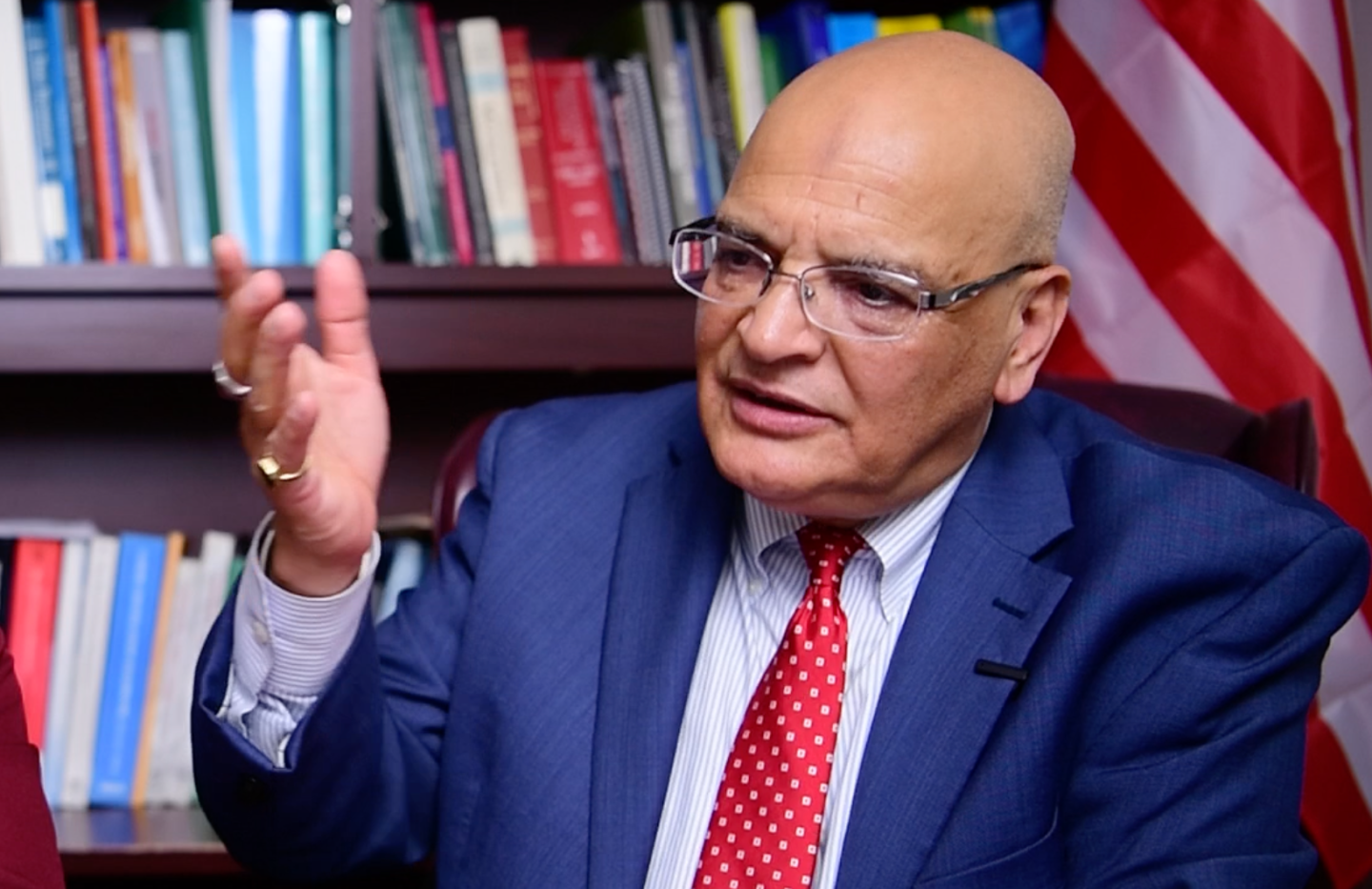
By Kishor Panthi, NEW YORK:- Keshav Raj Sedhai, an immigration attorney based in New York, has warned that even if an individual on a non-immigrant visa has timely applied to renew or change their immigration status, their legal status does not automatically continue once their existing Form I-94 expires. He cautioned that, in such a situation, federal immigration authorities could initiate deportation proceedings even while the application remains pending with USCIS.
According to Sedhai, if an application to extend or change one’s status—filed in a timely manner and in accordance with the law—is still pending, the applicant can generally be protected from having their stay counted as unlawful. However, this does not automatically maintain an individual’s non-immigrant immigration status once their previous I-94 expires. He notes that this distinction is particularly significant given the current climate of immigration enforcement.
According to USCIS, an individual’s valid nonimmigrant status may end upon the expiration of their existing Form I-94, even if an application to extend that status was filed in a timely manner. Furthermore, the Department of Homeland Security may initiate removal proceedings while the application remains pending.
However, while a timely filed and non-frivolous application is pending, the applicant may generally be protected from the accrual of “unlawful presence.” This can prevent the accumulation of a period of unlawful presence that might otherwise serve as the basis for a three-year or ten-year bar on re-entry following removal from the United States.
However, maintaining a non-immigrant status and remaining within an authorized period—such that the time spent is not counted as unlawful presence—are two distinct legal conditions.
For instance, an individual holding H-4, B-2, L-2, or O-3 status may no longer maintain that status once their Form I-94 expires. Nevertheless, if a qualifying application to renew or change their status is pending, the time spent may not be counted as unlawful presence.
Therefore, according to Sedhai, one cannot conclude that they still hold a valid non-immigrant status simply because their period of unlawful stay has not been formally calculated.
Under Section 237(a)(1)(C)(i) of the U.S. Immigration and Nationality Act, an individual who entered the United States as a non-immigrant may be subject to deportation if they fail to maintain the immigration status they held upon entry or subsequently acquired.
On this basis, immigration officials could argue that an individual cannot be considered to have maintained their previous status simply because an I-539 or another application remains pending after the expiration of their I-94.
Sedhai notes that an application to renew or change one’s status is a process through which new authorization is requested from USCIS. Until such an application is approved, it cannot be equated to a situation where a new status has already been granted.
Therefore, he warns that the belief—”I have submitted an application for status renewal on time, so my valid status remains intact”—could be legally incorrect.
If USCIS approves a valid application for status renewal, it may grant the approval in a way that the new period takes effect from the date the previous I-94 expired.
This creates a different legal situation during the period the application is pending compared to after it has been approved. While the application is pending, an individual may not hold a currently valid non-immigrant status. However, if the application is subsequently approved, it may be considered that the individual’s status has remained continuous, dating back to the expiration date of their previous I-94.
Sedhai suggests that if an individual enters removal proceedings while an application is still pending, they should immediately consult with an immigration attorney to coordinate their USCIS application with their legal defense against removal.
If an application for status renewal is approved before the removal proceedings conclude, an attorney can evaluate the possibility of using that approval to terminate the removal proceedings or to seek other appropriate legal relief.
A recently reported incident has further highlighted this legal risk.
Details have emerged regarding an individual in H-4 status who came into contact with federal immigration authorities at Newark Airport in New York. This individual had entered the United States in 2013 under F-1 student status. Subsequently, they obtained H-1B status and later transitioned to H-4 status.
The validity of the individual’s most recent H-4 approval and I-94 expired in January 2026. However, an I-539 application for the renewal of H-4 status had been filed as early as August 2025, which remained pending at the time details of the incident were made public.
Federal authorities also questioned the individual regarding their past immigration history, specifically concerning their entry into the United States under F-1 status.
However, the full circumstances of the incident and the actions taken by the relevant government authorities have not been independently verified. Nevertheless, this highlights an important legal point: having a pending Form I-539 application is not the same as possessing a Form I-94 that remains valid.
Many people might assume that traveling by air within the United States—moving from one location to another without leaving the country—carries no immigration-related risks. However, Sedhai has pointed out that such an assumption can be risky in situations where an I-94 has expired and an application to renew or change one’s status is still pending.
Domestic air travel within the United States is generally not considered leaving the country, and it does not automatically result in the cancellation of a pending application. However, there is a risk of coming into contact with immigration officials or other federal law enforcement agents during such travel.
In particular, since one might encounter federal officials at airports, individuals whose I-94 has expired could face questioning regarding their immigration status.
He suggests that individuals whose legal basis for remaining in the U.S. relies on a pending application—even after their I-94 has expired—should consult with an immigration attorney before undertaking any unnecessary domestic air travel.
This matter may be particularly relevant for individuals holding H-1B, H-4, L-1, L-2, O-1, O-3, TN, E-3, E-2, or B-1/B-2 visas.
Similarly, in certain circumstances, this may also affect individuals in F or M student status, as well as other non-immigrants who have applied to renew or change their status via Form I-539 or Form I-129.
However, since each individual’s immigration status is different, the legal consequences may also vary. In such a situation, several factors play a significant role: the specific category of the individual’s visa or immigration status; whether a fixed expiration date was assigned on their Form I-94 upon entry into the U.S., or if their status was granted for the “duration of status” (D/S)—covering the period of their studies or other authorized activities; whether any application to renew or change their status was filed in a timely manner and in accordance with the law; whether the individual engaged in unauthorized employment or violated immigration regulations; and whether they are entitled to any other form of legal or regulatory protection.
Sedhain suggests that individuals whose I-94 has expired—but who have a pending application to renew or change their status—should clearly understand which legal protections their application provides and which areas remain unprotected.
He advised that such individuals should keep the following documents in a safe place, ready to be presented immediately if needed: a copy of their old I-94, their passport, the receipt notice for the application filed with USCIS, a copy of the pending I-539 or I-129 application, the current approval notice of the principal applicant or spouse (where applicable), proof that the application was filed on time, and the contact details of their immigration attorney.
Most importantly, one should not assume they hold a valid non-immigrant status simply because the period of unlawful presence is not currently being counted. Sedhai emphasized the need to understand the distinction between the legal protections afforded while an application is pending and the actual maintenance of a valid immigration status.