Trump administration cannot hold individuals in custody for more than 90 days
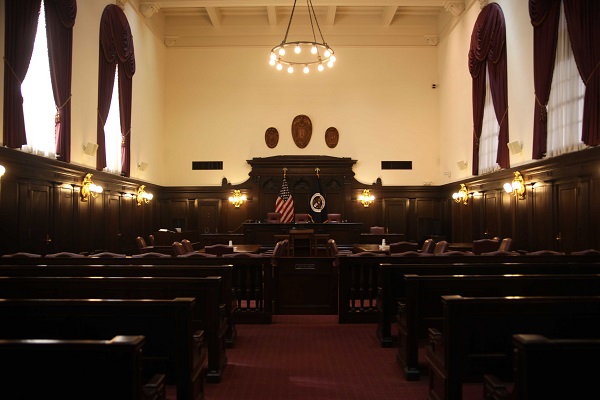
LOUISIANA:- On Thursday, a U.S. appeals court ruled that under the Trump administration’s policy of mass detention, U.S. Immigration and Customs Enforcement (ICE) cannot detain individuals for more than 90 days without providing an opportunity for release on bond.
Writing the majority opinion in Thursday’s ruling, U.S. Circuit Judge Leslie Southwick stated that the U.S. Supreme Court had already clarified in 2001 that “due process” protections apply to everyone—including the two Mexican nationals and one Honduran national involved in the case before the Fifth Circuit Court.
“It is part of the historic glory of a long-established charter that it makes no exception in granting basic rights to the people within our borders—including the right to a hearing when personal liberty is taken away,” wrote Southwick, who was appointed by Republican President George W. Bush.
U.S. Circuit Judge Cory Wilson dissented, stating, “The majority marginalizes the clear grant of plenary constitutional authority to Congress over immigration matters.”
This ruling by a 2-1 panel of the New Orleans-based 5th U.S. Circuit Court of Appeals could affect thousands of individuals detained in other states during President Donald Trump’s crackdown on immigration.
Another bench of the same court had previously upheld the Trump administration’s new interpretation of federal immigration law, which permitted the mandatory detention of non-citizens residing in the United States.
However, that ruling in February did not address the question of whether the ‘due process’ protections of the Fifth Amendment to the U.S. Constitution require that those immigrants be given the opportunity to appear before an immigration judge for a bond hearing and seek release.
Under federal immigration law, “applicants for admission” to the United States are subject to mandatory detention while their cases proceed in immigration courts and are ineligible for bond hearings.
Rejecting a long-standing interpretation of immigration law, the U.S. Department of Homeland Security took the position last year that non-citizens already residing in the United States—and not just those arriving at the border—qualify as “applicants for admission” subject to mandatory detention.
The Board of Immigration Appeals, a component of the Department of Justice, issued a decision in September adopting that interpretation. Consequently, immigration judges employed by the department across the country began ordering mandatory detention.
Federal appellate courts are divided on whether that interpretation of the law is correct, prompting the Trump administration to urge the Supreme Court last week to rule on the case fast track.