Indra Jatra celebrated with great fanfare in the courtyard of the Nepali Cultural Center in Colorado
Indra Jatra is not merely a festival but represents "our history, identity, and an invaluable heritage passed down through generations." Such events are crucial for keeping the unique identity of the Nepali and Newa communities alive amidst diverse cultures, and members of both the Nepali and American communities have participated in the program to experience Nepal's rich Newa culture.
By Natibaba Bhatta, COLORADO:- Indra Jatra (Yenya Punhi)—a grand festival embodying the historical, religious, and cultural identity of the indigenous Newa community of Nepal Mandala—has been celebrated with great grandeur in Colorado, USA.
Organized by the Colorado Newa Khala, the fifth edition of the festival took place on Sunday in the courtyard of ‘Nepali Ghar’ (the Nepali Cultural Center) in Westminster.
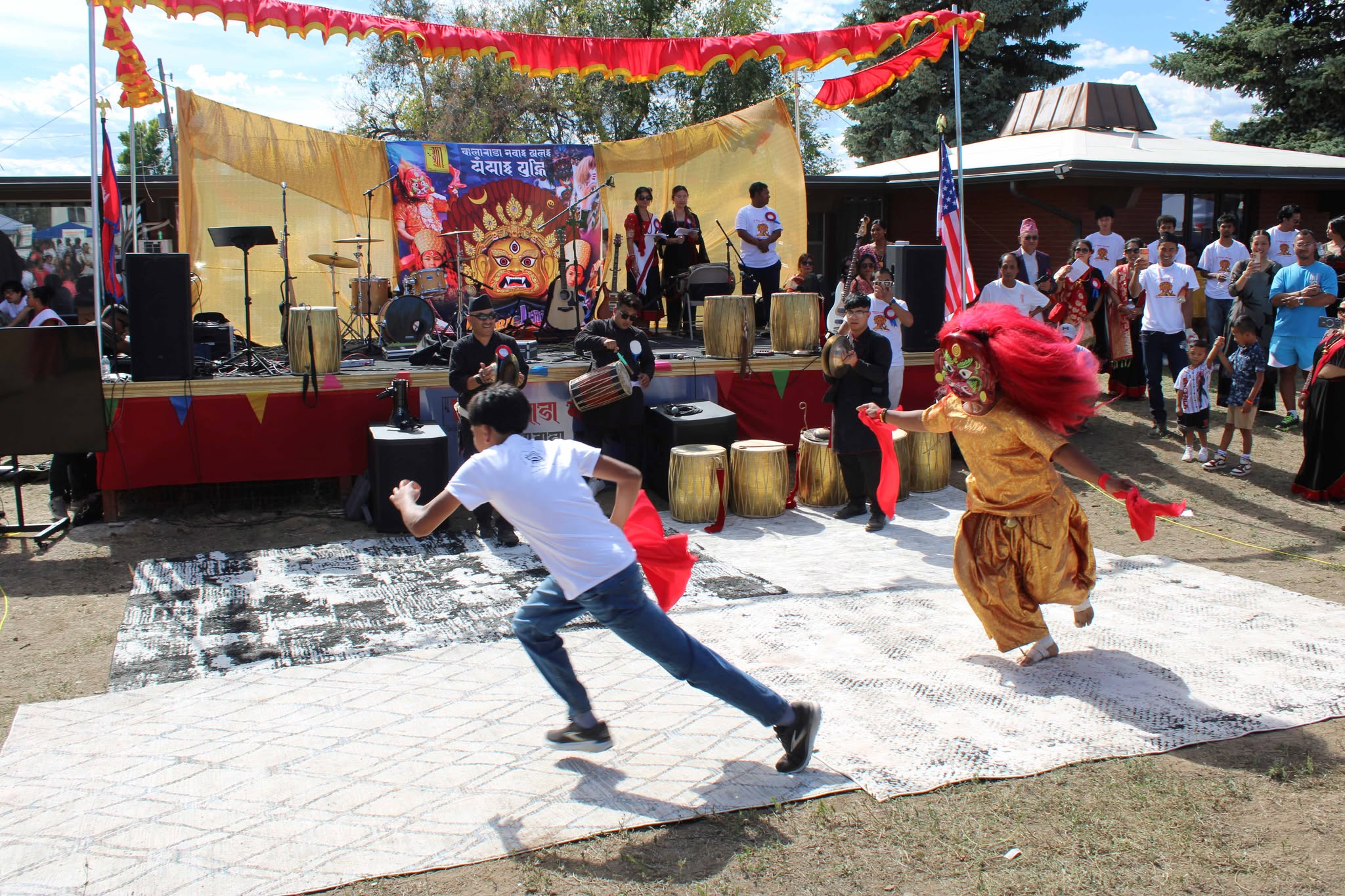
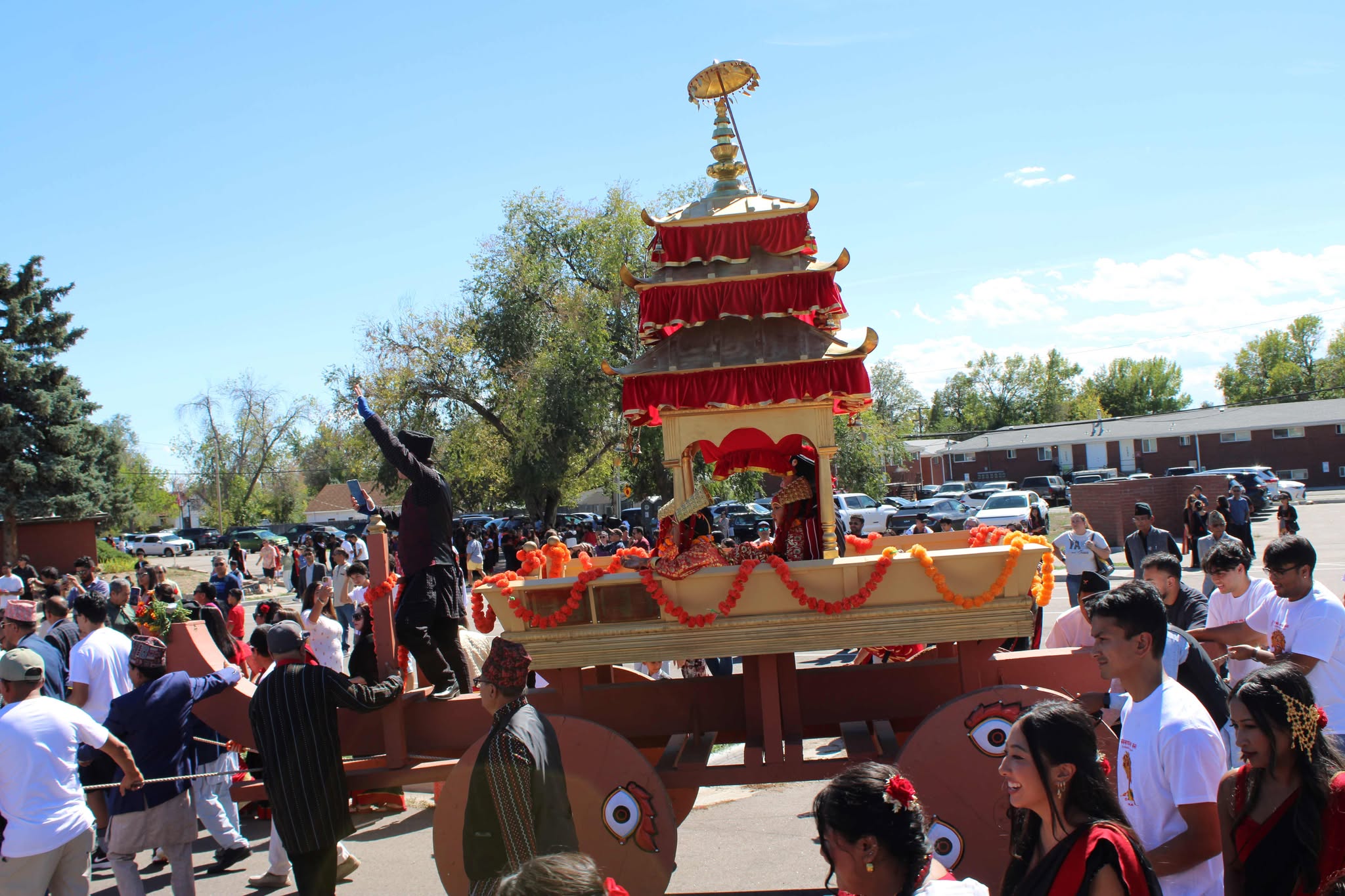
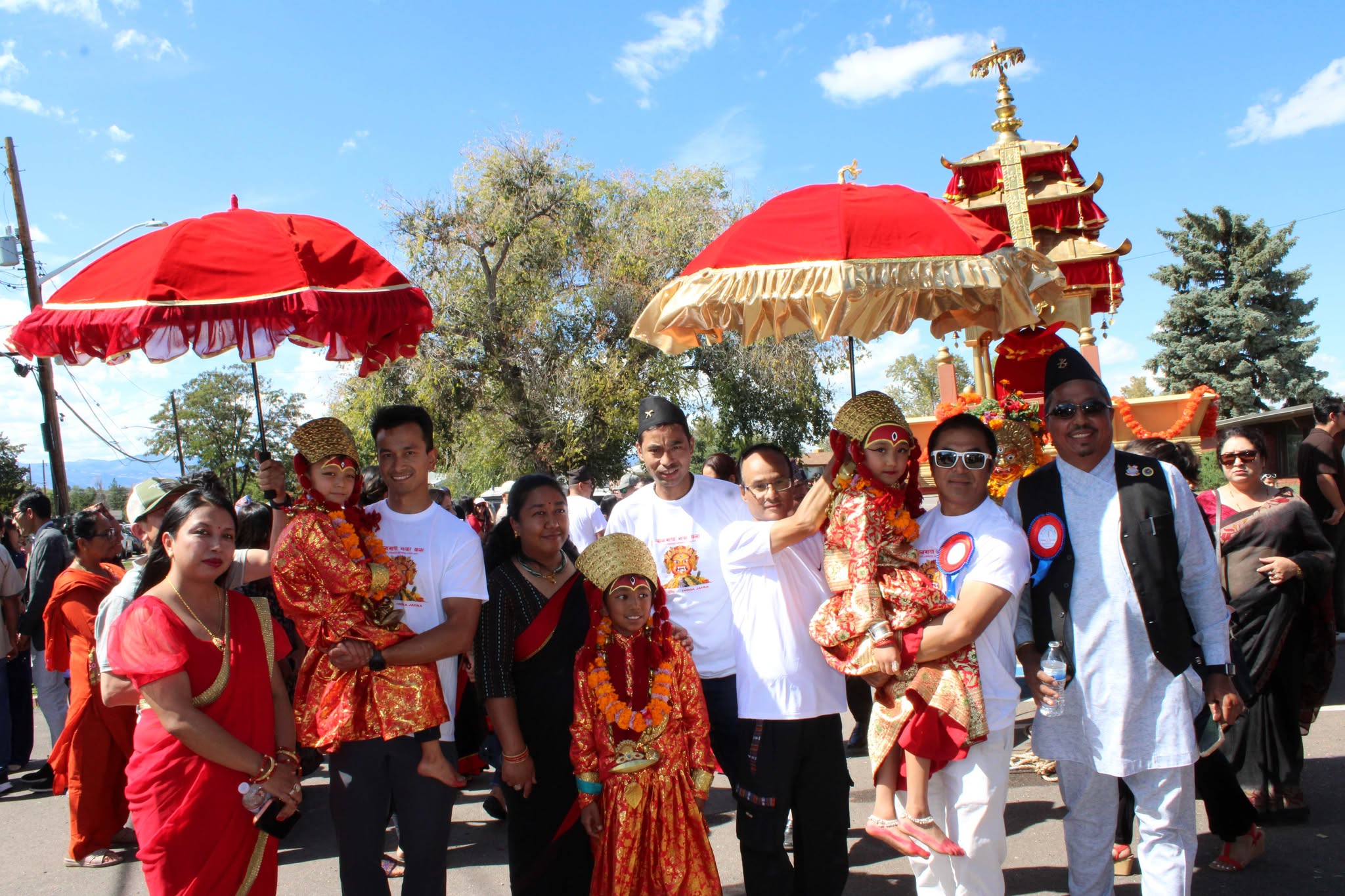 The event featured various cultural performances rooted in the indigenous traditions of the Newa community, including the Kumari Jatra, Lakhe dance, Pulukisi, cultural processions, Newa music, Samaybaji (a traditional Newa delicacy), and a musical performance by the Mandala Music Group.
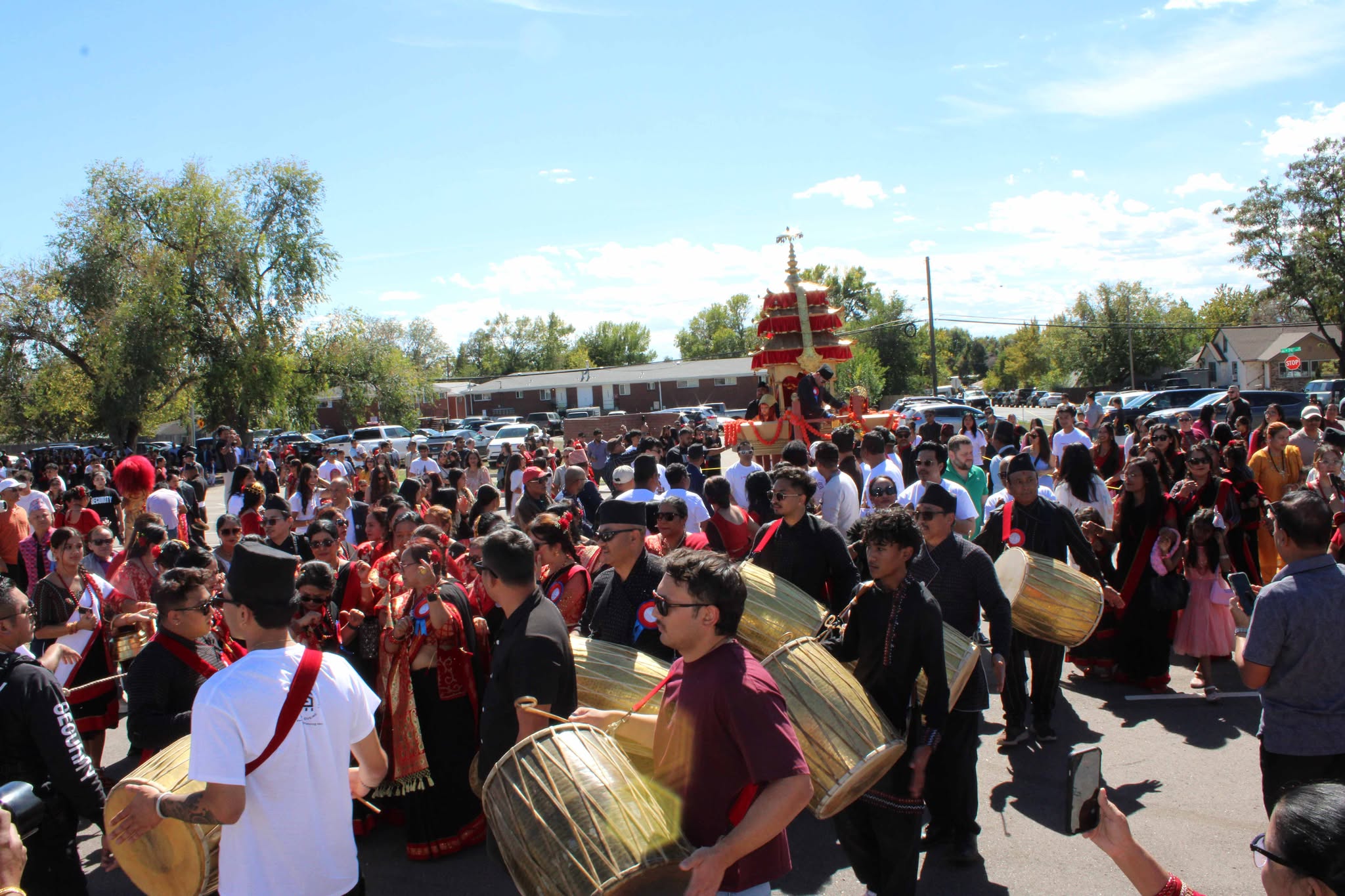
Held under the chief guestship of Boulder City Mayor Aaron Brockett, the program began with the ritualistic worship of the Living Goddess Kumari, Ganesh, and Bhairav. They were placed on a chariot and escorted to the venue—circling the courtyard of ‘Nepali Ghar’ to the beat of *Dhime* drums and accompanied by the Lakhe and Pulukisi.
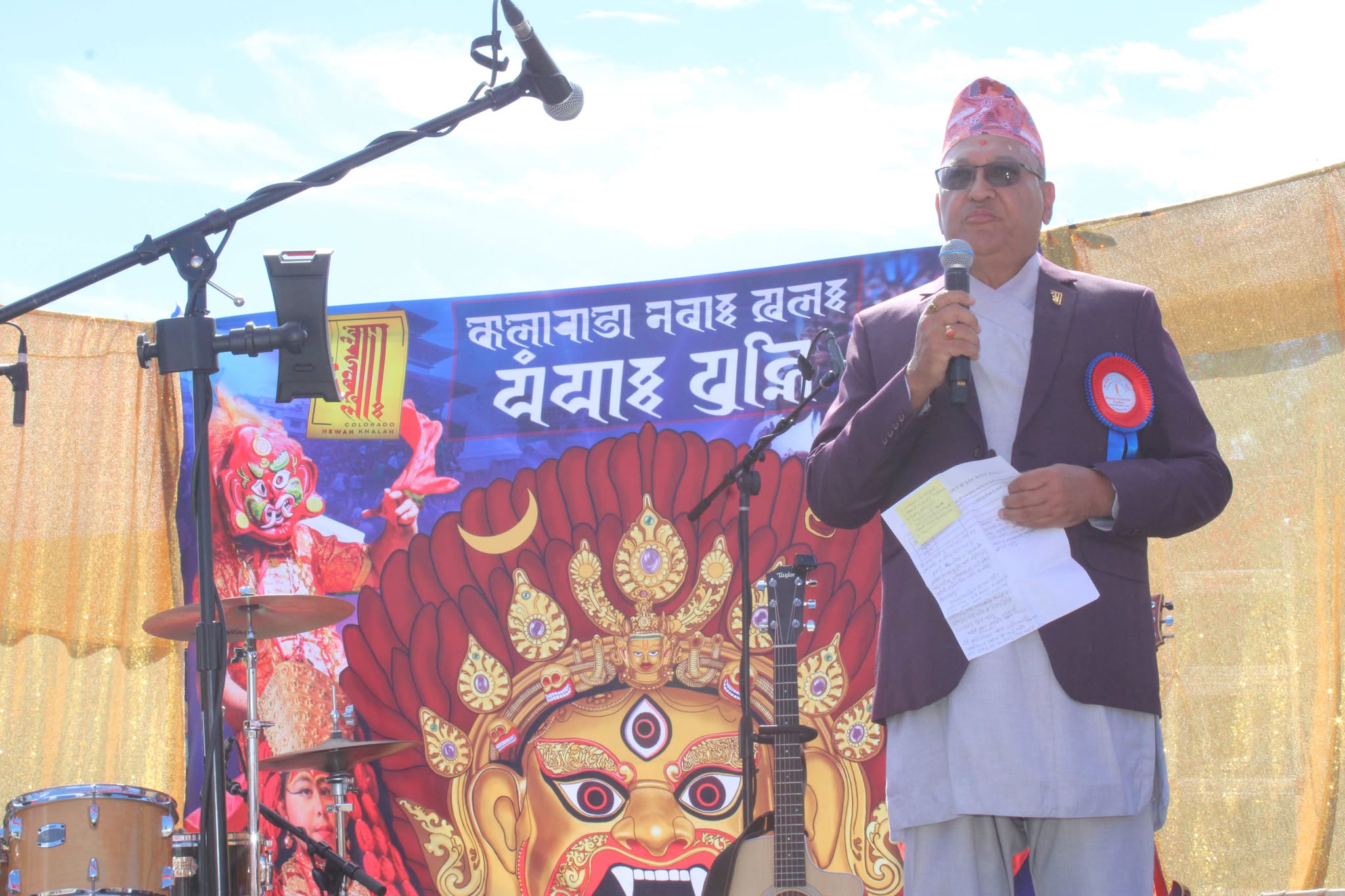
At the beginning of the program, Bhushan Lal Shrestha, President of Colorado Newa: Khalah, welcomed everyone present and highlighted the significance of the event.
 He also extended his gratitude to the members of the Newa: community who worked tirelessly to make the program a success, as well as to all the organizations, donors, volunteers, and artists who contributed their time, effort, and financial support.
Addressing the event, Chief Guest and Boulder City Mayor Aaron Brackett expressed his delight at participating in Indra Jatra—a festival rich in art, culture, and traditional values—and highlighted the sister-city relationship between Boulder and Kathmandu, while also sharing experiences from his visit to Nepal two years ago.
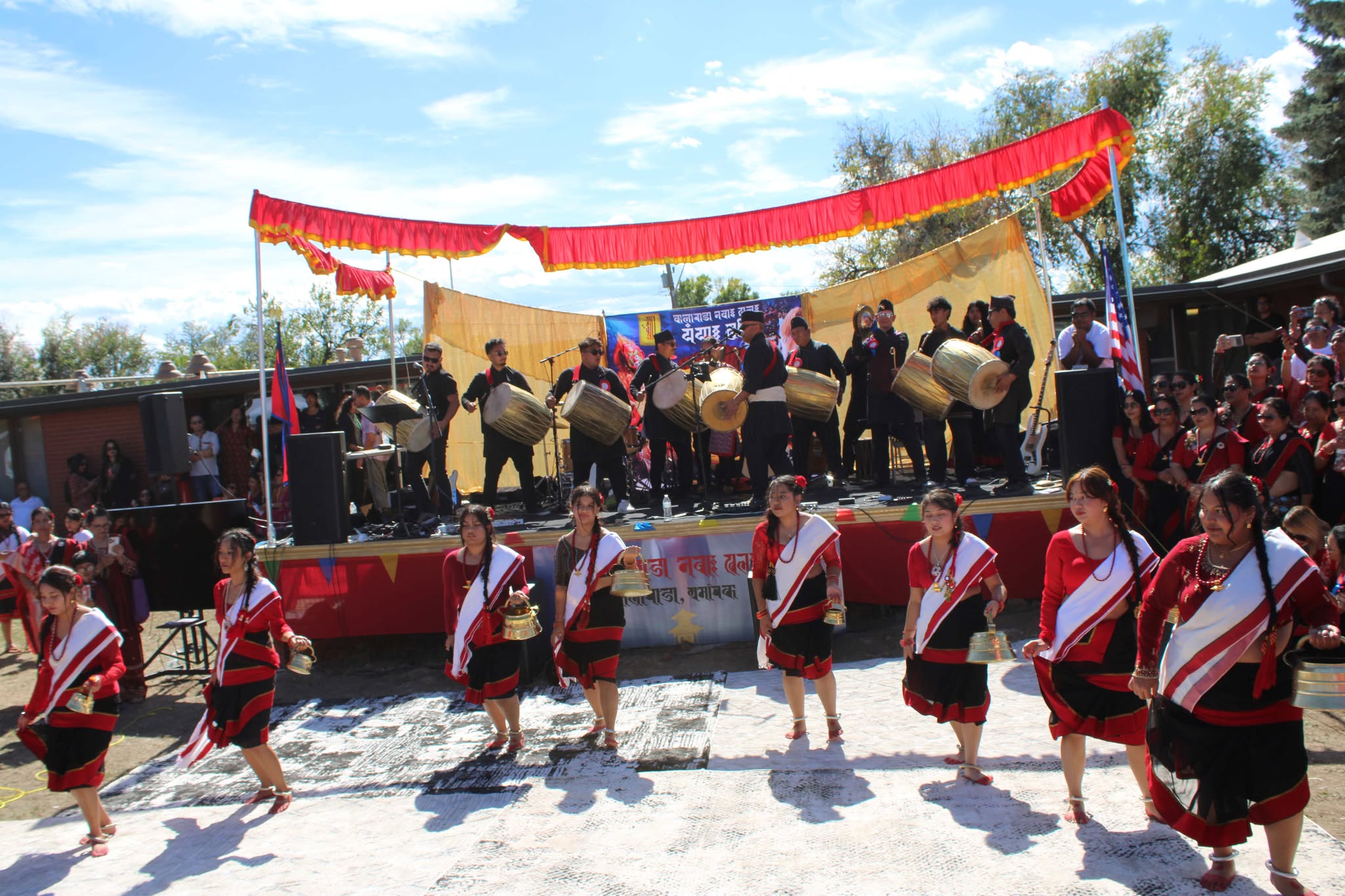 The program, skillfully hosted by Atisha and Samjhana, featured performances such as the Dhime dance, Lakhe dance, and dances reflecting Newa culture, alongside a beautiful performance by the Mandala Band.
Similarly, ‘Samaybaji’ was distributed as ‘Prasad’ to everyone present at the event. Seeing so many participants adorned in traditional Newari attire created the impression that one was sitting at Basantapur Dabali, watching the program.
Indra Jatra is not merely a festival but represents “our history, identity, and an invaluable heritage passed down through generations.” Such events are crucial for keeping the unique identity of the Nepali and Newa communities alive amidst diverse cultures, and members of both the Nepali and American communities have participated in the program to experience Nepal’s rich Newa culture.
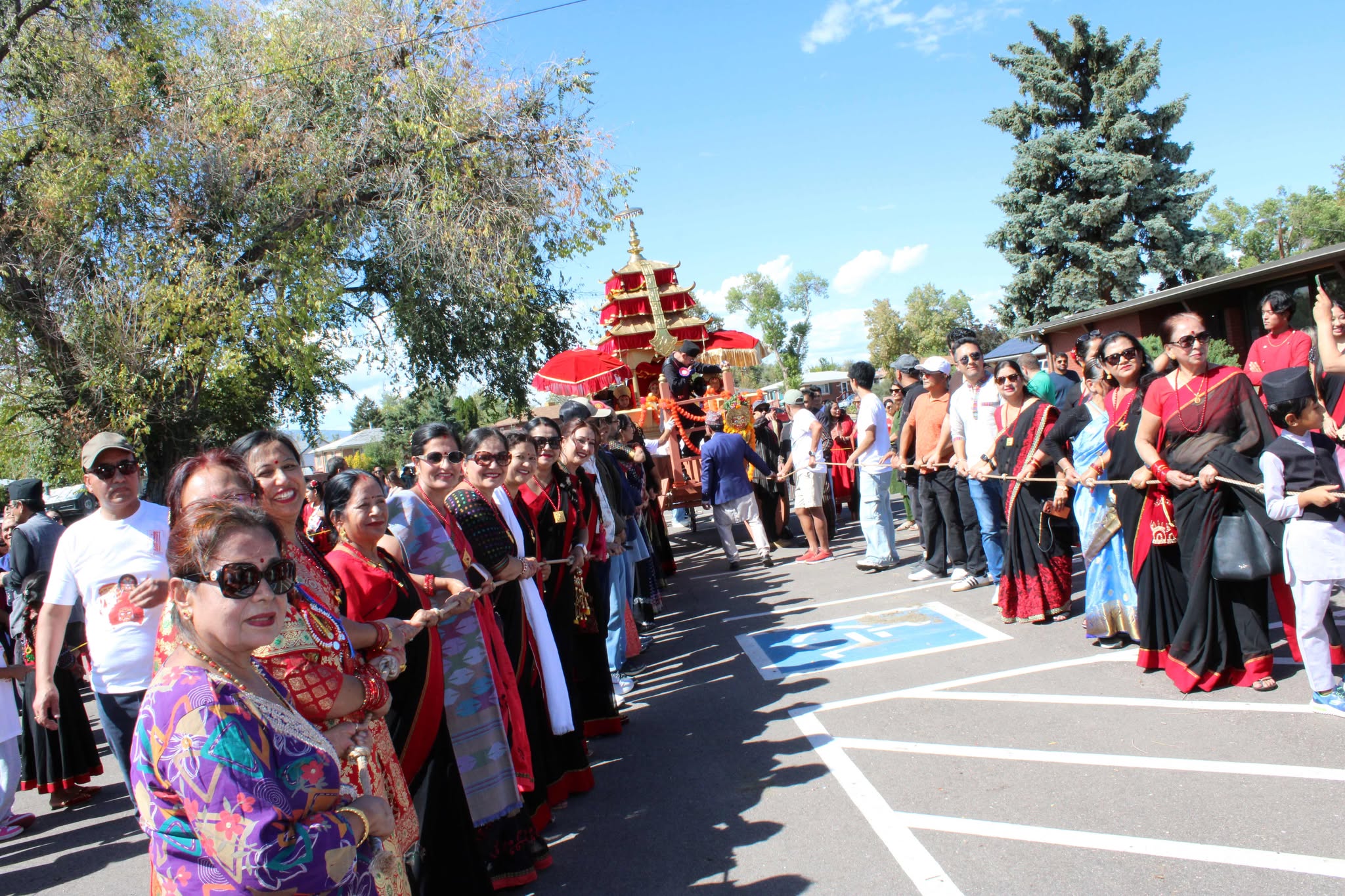 In a multicultural society like the United States, preserving festivals such as Indra Jatra is essential for passing on indigenous traditions and culture to future generations.
The event, held at the premises of the Nepali Cultural Center, featured more than 15 stalls representing organizations—such as Nepali Ghar and Blood Donors of America—as well as insurance companies, banks, and various other businesses.
The event, which ran from 12:00 PM to 5:00 PM, allowed participants to enjoy free entry and entertainment while also tasting ‘Samaybaji’ served as ‘Prasad’.
Indra Jatra is one of Nepal’s oldest and most significant festivals. Historians believe it originated around the 10th century during the reign of King Gunakamadeva, the founder of Kathmandu. It is believed that the tradition of celebrating Indra Jatra began alongside the establishment of the city of Kathmandu and the development of its urban civilization.
 According to legend, when Lord Indra came to Earth to pluck Parijat flowers for his mother, the residents of Kathmandu mistook him for a thief and bound him; however, upon realizing his true identity, they released him with honor. It is believed that the tradition of celebrating Indra Jatra originated in commemoration of this event.
For centuries, the Newa community has made an unparalleled contribution to shaping Nepal’s civilization through its language, literature, sculpture, architecture, music, festivals, the *Guthi* system, and communal lifestyle. Indra Jatra is a celebration that embodies all these cultural values and philosophies of life.
Colorado Newa Khala has been organizing Indra Jatra annually with the aim of connecting the new generation—born and raised in the United States—to their language, religion, traditions, and unique cultural identity.
 The organization has been actively working to preserve Newa culture, conduct educational programs, foster community unity, and expand cultural ties between Nepal and the global community.
By reviving Nepal’s millennia-old civilization and cultural heritage on American soil, the fifth Indra Jatra held in Colorado is envisioned not merely as a festival, but as a shared celebration that connects people with their roots, identity, and culture.