Constitution still holds promise for future: Experts
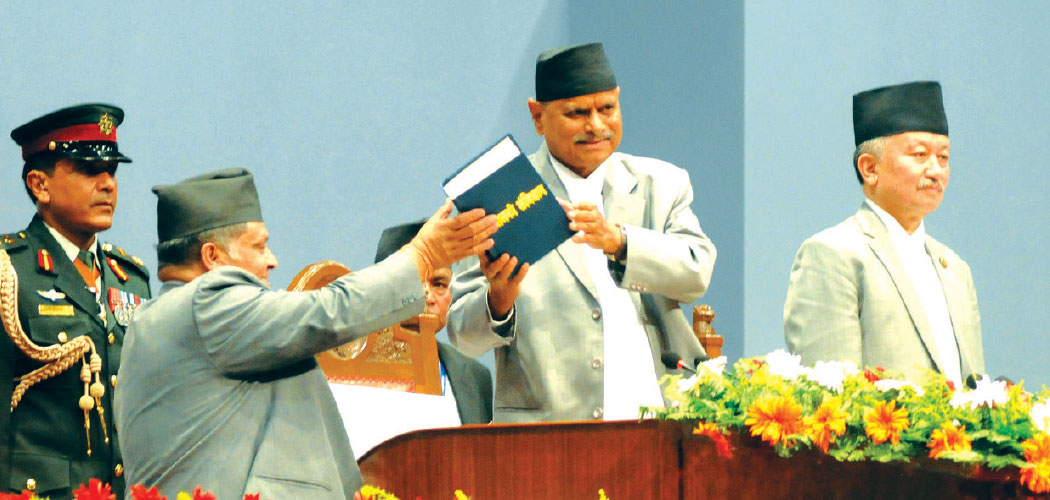
KATHMANDU:- After the Gen-Z protest, the country’s political course has taken a significant turn in leadership. In response to the demand of the protestors, former Chief Justice Sushila Karki has been appointed Nepal’s first female Prime Minister.
Protestors have raised demands ranging from withdrawing the federal structure and introducing a provision of directly elected executive, claiming that the existing constitution does not fully reflect the aspirations of younger generations and that it has created more political instability.
Currently, Nepal has a parliamentary system, the Prime Minister is chosen by the majority members of a party/coalition in the Parliament. But the protestors are calling for a presidential system, where the head of government (executive) would be elected directly by citizens, arguing it could ensure stronger accountability and stability.
Constitutional experts and advocates, however, stress that while calls for constitutional reform are growing, the country also required stability and legitimacy.
Experts warn that completely flouting the constitution could plunge the country into a legal and political vacuum.
They claimed that fundamental rights, the rule of law and institutional stability could be jeopardized without a functional constitutional framework. Any roadmap for change must preserve stability while opening space for reform.
Constitutional law expert Dr. Bipin Adhikari emphasised the importance of the constitution, stating that it holds significant relevance in the current context.
Dr. Adhikari said the constitution is the fundamental law of the land and all the actors are bound by it, including the interim PM and the government. “It is vital to function within its confines in order to avoid a constitutional crisis.”
The constitution is the moral force behind the present regime, he said. “It remains the only hope and foundation for the transformative changes the country has undergone. In times of uncertainty, it is the only document we can turn to.”
He acknowledged that while the current election process may not have been entirely grounded in the constitution, due to the need for crisis management, the constitution still plays a central role.
“The Prime Minister of the interim government took the oath of office under the constitution, and the government’s functioning is based on it,” he added.
Adhikari further noted, “The constitution may have been affected to some extent in the context of forming the government, but it still stands firm. The government has sworn allegiance to it and has made a clear commitment to hold elections within six months, as provided by the constitution.”
Commenting on demands to amend the constitution, Dr. Adhikar said, “The amendment should be carried out through constitutional processes.”
Likewise, senior advocate and Professor of Law Surya Dhungel and senior advocate Tikaram Bhattarai also echoed the relevance of the constitution at the present situation.
To address the current challenges, Prof. Dhungel proposed the formation of a strong commission that includes representation from key sectors and Gen Z, whose movement has shaped the current political change.
This body would be responsible for drafting a comprehensive charter for constitutional reform, alongside preparations for upcoming elections, he added.
Dhungel stated that there are several pressing issues regarding the reform of the constitution, particularly concerning the model of a directly elected executive, and whether the country should adopt a prime ministerial or presidential system.
Given the current dysfunction of government institutions, he stressed the urgent need to restore and operationalize them. Expanding the cabinet and forming a competent, forward-thinking team would be an essential step toward long-term reform.
“We must understand that withdrawal of the constitution is not an option,” Dhungel asserted. “To institutionalize amendments, we need to work within the constitutional framework.”
Highlighting the importance of constitution at the time of crisis, senior advocate Bhattarai said the Prime Minister Karki was appointed by going a bit against the spirit of the constitution, but she should now safeguard the constitution.
He urged that the interim government should focus on stability and holding elections, while constitutional amendments should be the responsibility of a newly elected government.
“It is only the elected people’s representatives, through broad and extensive discussion, who can decide on necessary changes,” he explained.