Trump Admin plans to increase fees for H-1B visa extensions; South Asian workers to be affected
Public data from the NFAP shows that Amazon had the highest number of approved H-1B applications for continued employment in fiscal year 2025 (14,532 applications), followed by TCS (5,293), Microsoft (4,863), Meta Platforms (4,740), Apple (4,610), and Google (4,509).
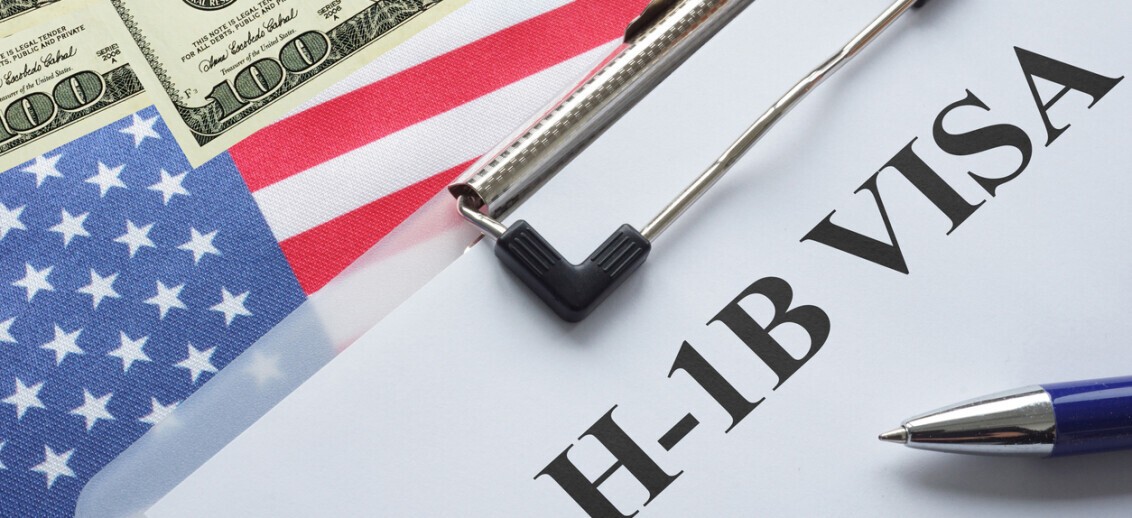
By Purushottam Dhakal, LOS ANGELES:- The Trump administration is planning to increase fees for H-1B and L-1 visa extensions. This move is set to raise costs for major U.S. companies that rely on thousands of skilled workers from China, India, and South Asia.
According to the Department of Homeland Security’s (DHS) regulatory agenda, a new rule is expected this month regarding the application of the “9/11 Response and Biometric Entry-Exit Fee” to work visa extension requests as well.
Under current USCIS rules, employers with more than 50 employees—where more than half hold H-1B or L-1 visas—are required to pay an additional $4,000 for H-1B applications and $4,500 for L-1 applications only when filing an initial petition or when an employee changes employers.
The rule states, “DHS is amending and clarifying the regulations to ensure that the ‘9/11 Response Fee’ applies to all H-1B and L-1 visa extension applications.”
According to the DHS, rules are being amended and clarified to ensure that the ‘9/11 Response Fee’ applies to all H-1B and L-1 visa extension applications.
This new proposal follows a recent legal setback for the Trump administration; a U.S. federal appeals court refused to stay a lower court’s order that had blocked the administration’s proposal to impose a $100,000 fee on new H-1B visas.
Since H-1B visa holders typically require a visa extension after an initial three-year stay, the proposed changes could increase immigration-related costs for companies heavily reliant on foreign talent, including professionals from China, India, and South Asia.
This proposal also affects multinational companies like Google, Microsoft, and Meta, which have been using L-1 visas to transfer their executives, managers, and employees with specialized knowledge to U.S. offices.
This move is likely to impact skilled professionals from China, India, and South Asia working in the U.S., as they account for a significant share of H-1B visa extensions approved each year.
According to data from U.S. Citizenship and Immigration Services (USCIS), a total of 406,685 H-1B applications were approved in fiscal year 2025.
Of these, 71 percent of the approvals (i.e., 291,542 applications) were for the continuation of employment rather than for first-time entrants into the program.
Indian nationals accounted for 226,359 of those approvals, representing 77.6 percent of the total H-1B renewals; China followed in second place with 31,581 approvals.
The proposed fee hike could particularly impact large technology companies and IT service providers that rely on H-1B workers.
Public data from the NFAP shows that Amazon had the highest number of approved H-1B applications for continued employment in fiscal year 2025 (14,532 applications), followed by TCS (5,293), Microsoft (4,863), Meta Platforms (4,740), Apple (4,610), and Google (4,509).