The Muscat Process : Why D-8 Experiences Are Relevant
The Gulf has many security (formal and informal) laterals, but they remain predominantly bilateral — selective rather than inclusive and collective. What it still needs is greater regional ownership of the process through which those relationships, interests and differences are managed. Muscat could provide such a starting point.
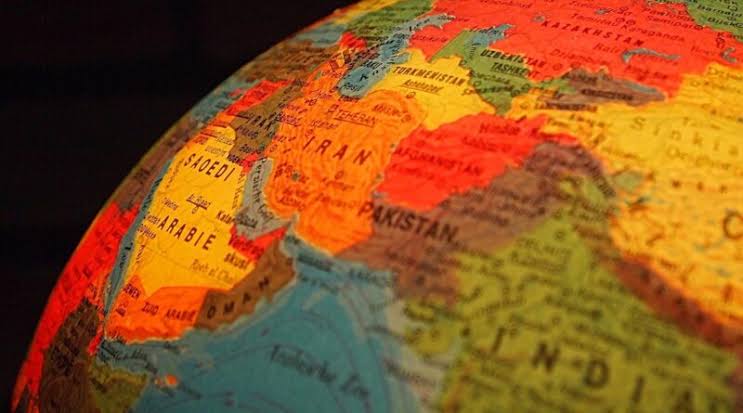
The current U.S. military withdrawal from Iraq, as noted in Olga Algayerova’s and Ana Birchall’s recent texts, adds yet another layer of uncertainty to an already fragile regional security environment in West Asia. Such transitions inevitably create openings that different actors may seek to test or exploit. Oman’s Foreign Minister, Sayyid Badr Albusaidi, in his address at Cambridge on 26 October 2026, has likewise underscored the importance of inclusive regional security and collective responsibility among the Gulf’s littoral states.
This is precisely why the Muscat Process—as advocated by the Group of Friends since June 2026—is needed now more than ever: to preserve channels of communication and confidence before security gaps, such as those in Yemen, become new escalations.
*********
The Gulf is often discussed as a security theatre in its own right. Yet its strategic significance extends far beyond the Gulf itself. It is a centre of global energy flows, maritime commerce and investment, while its stability has direct consequences for the wider Middle East, South Asia, Africa and the global economy. For countries of the Global South in particular, developments in the Gulf are not distant geopolitical events. They affect trade, energy security, investment, employment and connectivity. The global ripple effects of the crisis in the Strait of Hormuz since June 2026, and the further escalation of hostilities on the other flank of Arabian Peninsula – that one next to Bab el-Mandeb, is a classic example.
This broader perspective is familiar to those of us who have worked through the D-8 framework. The D-8 Organization for Economic Cooperation brings together Bangladesh, Egypt, Indonesia, Iran, Malaysia, Nigeria, Pakistan and Türkiye (with Azerbaijan joining in March 2025)—meaning that half of its members have direct stakes in the Middle East.
Founded in 1997 as a platform for economic cooperation, it was conceived precisely across geographical, political and economic differences. Its membership stretches across three continents and includes several of the mega demographies and mega economies most directly relevant to the wider West Asian and Gulf environment, while also connecting that region to South and Southeast Asia and Africa. The experience of D-8 demonstrates that countries do not need to share identical political positions in order to identify practical areas of common interest and develop habits of cooperation.
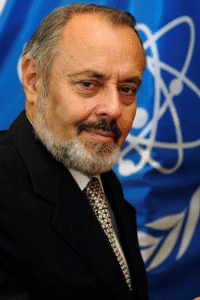
My own tenure as Secretary-General of the D-8 taught me that heterogeneity need not be an obstacle to cooperation. On the contrary, with political sensitivity, patience and a focus on common interests, even highly diverse states can develop habits of dialogue and practical cooperation, without first resolving all their differences. My experience at the D-8 has taught me that for heterogenous states / organizations to succeed, they must have well-structured frameworks of cooperation. It is in this regard, that the D-8 must be credited for having established time-tested structures such as a permanent secretariat, ministerial meetings, and perhaps most importantly, a consensus-based decision-making process, that enables leaders to discuss critical issues exhaustively, regardless of their divergent views or position.
This distinction is increasingly important in the Gulf. The region does not lack security relationships, military capabilities or external partnerships. What remains more difficult is the creation of an inclusive regional mechanism through which states with different security perceptions can communicate regularly, reduce miscalculation and gradually develop confidence.
Recent proposals for a Muscat/Oman Process deserve consideration in precisely this context. The idea is not to establish another alliance, nor to create an externally imposed security architecture. It is to establish a continuing regional process in which the states most directly concerned can discuss their security environment, identify areas of practical cooperation and, over time, develop a greater capacity to shape their own regional order.
This is an important distinction. An event can address a crisis; a process can create continuity. An event can facilitate an adjustment; a process can help build an order – a sustainable and long-lasting one. The experience of international diplomacy shows that durable arrangements rarely emerge because all participants suddenly agree. More often, institutions become useful because governments recognise that continuing disagreement itself requires rules, channels of communication and regular contact.
The Gulf is no exception. States may continue to disagree over fundamental political, security and strategic questions. They may maintain different relationships with major external powers. They may have different assessments of regional threats. None of this necessarily prevents them from discussing maritime safety, freedom of navigation, crisis communication, protection of critical infrastructure, disaster response, economic connectivity or other practical matters of common concern. These areas can provide an initial layer of confidence even when agreement on larger questions remains distant.
The role proposed for Oman is therefore particularly interesting. Oman’s diplomatic tradition has demonstrated the value of maintaining communication across political divides. A Muscat-based process would not require Oman to mediate every dispute or to prescribe the outcome. Its more useful role could be that of facilitator and convenor — providing a setting in which the countries concerned can meet regularly and determine the pace, agenda and eventual scope of their cooperation themselves.
This vision gained renewed relevance with the October 2026 address by Oman’s Foreign Minister, Sayyid Badr Albusaidi, at the University of Cambridge. Speaking on inclusive security in the Gulf, he called for all eight Gulf littoral states—including Iran and Iraq—to take collective responsibility for their regional security, with a non-aggression pact as the longer-term objective. His message reinforces a central lesson of the D-8 experience: sustainable cooperation cannot be built on exclusion or exclusive reliance on external powers, but requires regional ownership, regular dialogue and institutionalised mechanisms through which differences can be managed. This is precisely the rationale behind the proposed Muscat/Oman Process—not to prescribe outcomes in advance, but to create the conditions in which regional states can shape their own security arrangements through dialogue, confidence-building and practical cooperation.
It also explains why the process should remain regionally owned. International partners will continue to have legitimate and substantial interests in the Gulf. The United States, Russia, China, European countries, Far East, India, ASEAN and others will remain important economic and security actors. Regional ownership should therefore not be understood as a rejection of international partnerships. Rather, it means that the countries whose security is directly at stake should have a greater capacity to shape the regional framework within which those partnerships operate.
Far from the usual diplomatic centres, the D-8 experience offers a useful reminder here. Cooperation becomes possible not because differences disappear, but because countries learn to separate areas of disagreement from areas where common interests can be pursued. Economic cooperation, trade, technology, energy and connectivity can create practical relationships even among states whose wider political perspectives are not identical. Indeed, I saw this at play during my 4-year stewardship as the D-8 Scribe during which member states meticulously stuck to the core mandate of the organization, that is, discussions on economic and trade issues that have the potentials to improve the livelihood of their people, regardless of the polical ideology of the countries involved.
The same principle could have relevance for the Gulf and the wider West Asian region. A regional process does not have to begin with agreement on the final architecture. Indeed, demanding such agreement at the outset may make the process impossible. It can begin more modestly: with regular contact, confidence-building, practical cooperation and an understanding that regional stability is ultimately a shared interest.
The Muscat/Oman Process – first introduced by the Group of Friends of the Process in June 2026 – should therefore be seen less as a proposal for a finished security structure than as a possible mechanism through which such a structure could gradually emerge – drawing on the positive legacy and accumulated institutional experience of organisations such as the OSCE, SCO, D-8, OPEC and the like. Its value would lie not in deciding in advance what the Gulf’s future order should look like, but in creating the conditions in which the states of the region can participate in shaping it.
In an increasingly fragmented international environment, this may be one of the most important forms of regional diplomacy: not asking countries to agree before they sit together, but creating a framework in which sitting together can eventually make agreement more possible.
The Gulf has many security (formal and informal) laterals, but they remain predominantly bilateral — selective rather than inclusive and collective. What it still needs is greater regional ownership of the process through which those relationships, interests and differences are managed. Muscat could provide such a starting point.