Researchers Anish Damodaran, A.C. Charania and Saptarshi Bandyopadhyay awarded NASA fellowships
According to NASA, these early-stage projects will focus on areas such as solar radiation management, astronaut safety, and space imaging.
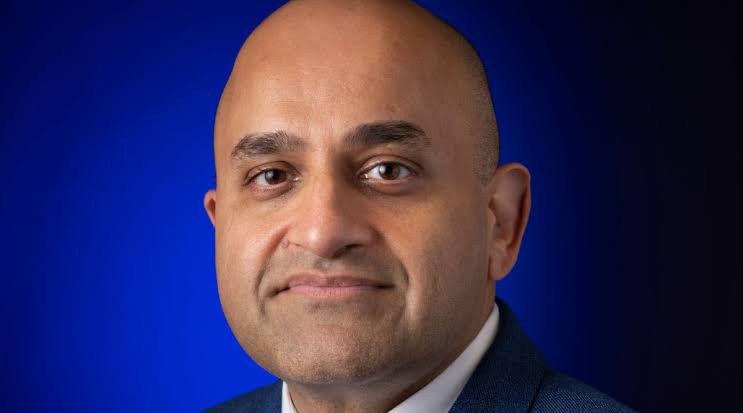
LOS ANGELES:- Three Indian-American researchers are among the fellows selected by NASA for the 2026 NASA Innovative Advanced Concepts (NIAC) Phase I grants.
The fellows behind the 18 selected visionary technology concepts will receive up to $175,000 for nine months of initial research.
According to NASA, these early-stage projects will focus on areas such as solar radiation management, astronaut safety, and space imaging.
Dr. Saptarshi Bandyopadhyay, a researcher at NASA’s Jet Propulsion Laboratory in Pasadena, California, has received an award for his project titled “Dimming the Sun Using Controllable Dust Clouds” (DimSun). His study explores the use of controllable dust clouds in space to manage the solar radiation reaching Earth.
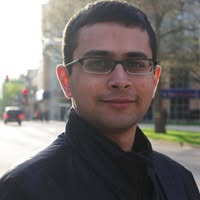
Bandyopadhyay, a recipient of a NASA fellowship, completed his Bachelor of Technology and Master of Technology in Aerospace Engineering from the Indian Institute of Technology Bombay in 2010. Later, he earned a Master of Science in 2013 and a PhD in Aerospace Engineering in 2016 from the University of Illinois Urbana-Champaign.
Charania, who has served as NASA’s Chief Technologist, holds bachelor’s and master’s degrees in aerospace engineering from the Georgia Institute of Technology, as well as a bachelor’s degree in economics from Emory University.
Born in the United States to an Indian immigrant family, he attributes his passion for space exploration to his family’s cultural emphasis on higher education and technological innovation.

Dr. Anish Damodaran, a researcher of Indian origin at the University of Central Florida in Orlando, has received an award for the ‘PS21’ project titled “Transforming Submillimeter Space Interferometry via Photonic Technology.” His project focuses on utilizing state-of-the-art photonic technologies in submillimeter space interferometry to enhance astronomical observations.