He was waiting for his son to return from the USS Lincoln. Then Border Patrol arrested him
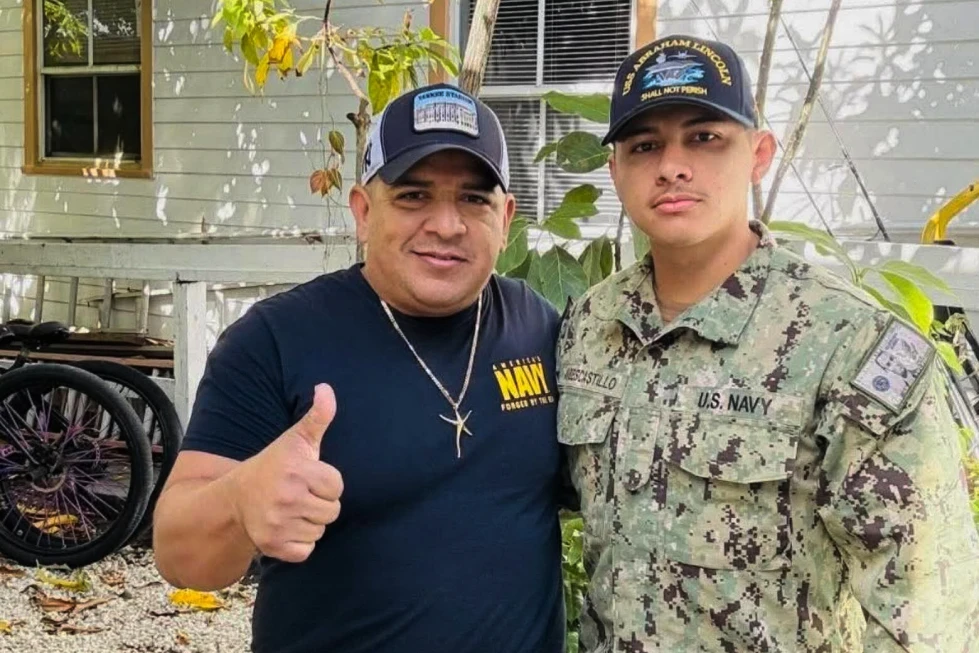
LOS ANGELES, (AP):- When Luis Manuel Aviles was arrested by immigration authorities, his son was entering his ninth month on the USS Abraham Lincoln with the Navy — a vessel that set a U.S. military record for uninterrupted time at sea, stirring concerns about supply shortages and deteriorating mental health among soldiers.
Luis Manuel Aviles, 48, was arrested after leaving his house to take his car to the mechanic, according to his wife, Argelia Aviles. She said her husband, a handyman in Key West, Florida, has a permit to work in the United States. Originally from Nicaragua, he has lived in the U.S. for 19 years.
“He dedicates himself only to work so he can put food on the table at home. He is a good father. He loves his children with all his soul,” said Argelia, 47.
Aviles’ arrest comes as the Trump administration rolls back immigration protections for military families to pursue its mass deportation agenda, detaining at least dozens of parents and spouses of active-duty U.S. troops.
At least six family members have been deported and one self-deported, the AP found in the first accounting of such detentions, which the government does not track. One spouse, the wife of a U.S. soldier who spent more than a month in federal immigration detention, was removed from a deportation flight to Brazil after the AP’s reporting.
One of the military’s most highly advertised immigration benefits is “military parole-in-place,” which allows the spouses, children and parents of active-duty service members and veterans to obtain legal immigration status from within the country. Not everyone qualifies: those who overstayed visas or who already applied for legal status at the border, for example.
The Department of Homeland Security said in a statement that Border Patrol agents arrested Luis Aviles on Saturday in Key West and that he will remain in ICE custody while the government seeks to deport him.
“Having a family member in the military is not a free pass to violate our nation’s laws,” the department said Sunday, adding that the Trump administration “does not pick and choose which laws to enforce.”
Aviles’ son said he has been working 12-hour work shifts for more than 250 days without a break on the USS Lincoln, which is deployed in the Middle East. The deployment has raised widespread concerns about the impact on service members who are away from land for long periods, food shortages, as well as the increasing strain on the ship and its equipment.
The Pentagon referred all questions to the Navy. The Navy didn’t immediately respond to an emailed request for comment on Sunday afternoon. Defense Secretary Pete Hegseth previously called conditions aboard the Lincoln “completely misrepresented.”
Joshua Aviles wrote in a Facebook post Saturday that he was still on the USS Lincoln “fighting for a country that has given me everything” when he got a call about his father’s detention on Saturday morning.
“This is heartbreaking for me. I don’t know how I can mentally continue working 12+ hour days knowing that my dad is somewhere, possibly treated like a criminal,” Joshua Aviles wrote.
Katherine Delgado, 28, Joshua Aviles’ sister, said that Joshua joined the military in part because he thought it would improve his father’s chances of getting citizenship and so that he would “no longer be living in fear of being arrested.”
She said being apart from Joshua, who she calls her “best friend” and her “ride-or-die,” has been devastating.
“I spent weeks without knowing where he was,” Delgado said. Once she heard from him, and was told that he wasn’t getting enough food, she said, she has spent hundreds of dollars to send him care packages with food and hygiene products — some of which never arrived.
Joshua is “supposed to come home soon,” Delgado said, referring to news that the ship her brother is on will soon be brought out of service in the Middle East. “And he’s gonna come home without his father.”
The son’s lengthy deployment has been challenging for Luis Aviles, according to his wife. He told her that he was looking forward to the deployment finally coming to an end. When six months passed and his son didn’t come back, Aviles was distraught, she said.
“He was excited,” she said. “He wanted to hug his son, as he hadn’t seen him for nine months.”