Baniya led Govt in minority, UML to form government with RPP support
Realizing that the support of our Nepali party alone was insufficient, the UML has sought the backing of the RPP. Uddhav Thapa, leader of the RPP's parliamentary party in Bagmati Province, has stated that they will not allow the province to remain held hostage by indecision and will cooperate to resolve the issues.
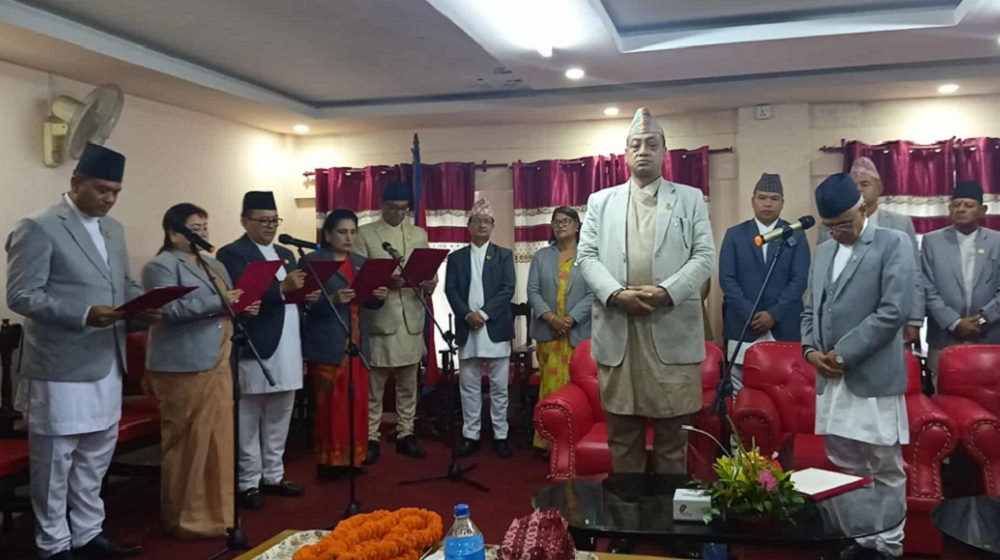
MAKWANPUR:- With the Nepali Congress-led government reduced to a minority, political calculations and speculation regarding the formation of a new government in Bagmati Province have begun.
The provincial government has been reduced to a minority after the CPN (UML) withdrew its support for the government led by Chief Minister Indra Bahadur Baniya. Under an agreement reached at the central level between the UML and the Communist Party of Nepal regarding government leadership across various provinces, the leadership of the Bagmati provincial government was allocated to the UML.
However, it appears that the Left alliance alone will not secure a majority in Bagmati Province. The support of the Rastriya Prajatantra Party (RPP) will be required to reach a majority.
Prem Bahadur Pulami, a Provincial Assembly member from the NCP, states that a coalition of three parties is necessary because two parties alone would not suffice to form the government. Following the resignations of six members, the 110-seat Bagmati Provincial Assembly currently has 104 members; a majority requires 53 members.
The Provincial Assembly comprises 36 members from the Congress, 26 from the NCP, 25 from the UML (including the Deputy Speaker), 12 from the RPP, three from the Nepal Workers and Peasants Party, and two from Hamro Nepali Party.
The UML (25 members) and the NCP (26 members) together account for 51 members. Even if the Hamro Nepali Party extends its support, bringing the total to 53, constitutional complexities would still persist.
According to Prakash Chapagain, Spokesperson for the Provincial Assembly Secretariat, the process of forming the government will proceed in accordance with Article 168, Clause (2) of the Constitution. However, since the post of Speaker is vacant and the Deputy Speaker is presiding over the session, Article 186 stipulates that the presiding officer may cast a casting vote only in the event of a tie (53-53). Consequently, even if the required numbers are secured to stake a claim, a constitutional complication appears likely to arise during the actual voting process.
Realizing that the support of our Nepali party alone was insufficient, the UML has sought the backing of the RPP. Uddhav Thapa, leader of the RPP’s parliamentary party in Bagmati Province, has stated that they will not allow the province to remain held hostage by indecision and will cooperate to resolve the issues.
Jagannath Thapaliya, leader of the UML Bagmati Province Parliamentary Party, stated that discussions with other parties regarding the formation of a new government have been initiated. Meanwhile, Prabhat Tamang—the provincial government spokesperson and Minister for Economic Affairs and Planning—also confirmed that talks among the parties are underway.
Chief Minister Baniya has stated that he will immediately step down if a claim to form the government is made with the required majority. He has traveled to Kathmandu to discuss recent political developments.