Trump administration passport revocations of Americans with child support debts of more than $10,000
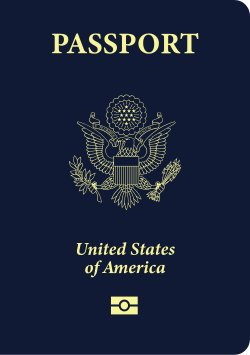
LOS ANGELES:- The Trump administration has further intensified its efforts to revoke the U.S. passports of parents who fail to pay child support. Starting November 30, the U.S. Department of State is expanding a policy to revoke the passports of—and deny new passport applications from—parents who owe $10,000 or more in unpaid child support.
Previously, this measure targeted individuals with child support arrears of $15,000 or more; however, the threshold has now been lowered to $10,000. Consequently, the international travel of thousands of American citizens could be affected. Once their passports are revoked, they will be unable to travel abroad until they have paid the outstanding amount and completed the necessary government procedures.
This initiative was launched under an act passed in 1996. The law empowers the federal government to withhold or revoke the passports of parents who fail to pay child support. However, its implementation remained limited for nearly three decades.
Previously, the government had planned to target individuals with outstanding debts of $75,000 or more, effective from June 1. In the first phase, however, the process of cancelling the passports of individuals with outstanding debts exceeding $100,000 was initiated.
However, since then, the government has been continuously lowering the debt threshold. The initiative, which began in May 2026 targeting individuals with an outstanding balance of $100,000 or more, saw the threshold adjusted to $75,000 and $50,000 in June, $40,000 in July, $25,000 in August, and $15,000 in October. From November 30, the scope will expand to include parents with an outstanding balance of $10,000 or more.
Under U.S. federal law, passport applications from parents with child support arrears exceeding $2,500 can be denied. However, in the past, this provision was primarily used to block new passport applications; the practice of actively seeking out and revoking passports that had already been issued was limited.
The Trump administration began implementing this policy with greater strictness starting in May 2026. To this end, records of outstanding arrears held by state-level child support agencies are forwarded to the Office of Child Support Enforcement, which operates under the federal Department of Health and Human Services. Once these records reach the U.S. Department of State, the process to revoke the individual’s existing passport or deny any new passport application is initiated.
An analysis of preliminary 2025 data from the Office of Child Support Enforcement reveals that there is $111.7 billion in outstanding child support arrears across the United States. This amount relates to 8.2 million cases with unpaid balances.
An analysis shows that the average amount of child support arrears across 28 states and Washington, D.C. is $13,644. This figure exceeds the $10,000 threshold that the State Department is set to implement, effective November 30.
In 2025, states were able to collect, on average, only 65.4 percent of the current child support amounts due. The collection rate was lowest in Arizona at 52.5 percent, while it was highest in Pennsylvania at 82.9 percent.
In Alabama, the average outstanding amount per case was $25,612. In Texas, meanwhile, the total outstanding amount reached a high of $18.3 billion.
A passport that has been revoked due to unpaid child support does not automatically become active again simply upon payment of the arrears. According to the U.S. Department of State, once the debt is paid, the individual must notify their state’s child support agency. Subsequently, the federal Department of Health and Human Services must verify the payment and remove the individual’s name from its records.
This process may take at least two to three weeks to complete. Once payment is confirmed by the Ministry of Health and Human Services, the Ministry of Foreign Affairs will review the passport-related restrictions and determine whether the individual is eligible to apply for a new passport.
The Ministry of Foreign Affairs has clarified that even if outstanding dues are paid, an old passport that has already been cancelled cannot be used for international travel.
Obtaining a new passport through the standard process may take four to six weeks. There is also an option to receive a passport within two to three weeks by opting for an expedited process, which requires an additional fee of $60.
If the passport of an individual traveling abroad or residing outside the United States is revoked, they must contact the relevant state—to which they owe a debt—and make the necessary payment.
Once payment has been made, the individual may contact the nearest U.S. Embassy or Consulate to apply for a limited-validity passport. Such a temporary travel document can be issued once the Department of Health and Human Services confirms that the debt has been settled.
However, such a document can only be used for direct return travel to the United States. An expired or cancelled passport cannot be used for international travel.
This development will primarily affect U.S. citizens traveling internationally. U.S. citizens cannot travel abroad without a valid passport. However, a passport is not required for travel between states within the United States.