Due to rising anti-immigrant rhetoric, Indian-American Republican voters cast their ballots for Democratic candidates in midterm elections
Most Indian-Americans believe that recent events—such as the alleged plot to attack a Hindu temple in Aurora, Illinois, and the stabbing of a Sikh truck driver, Gurwinder Singh, in Wyoming—could influence the upcoming election.
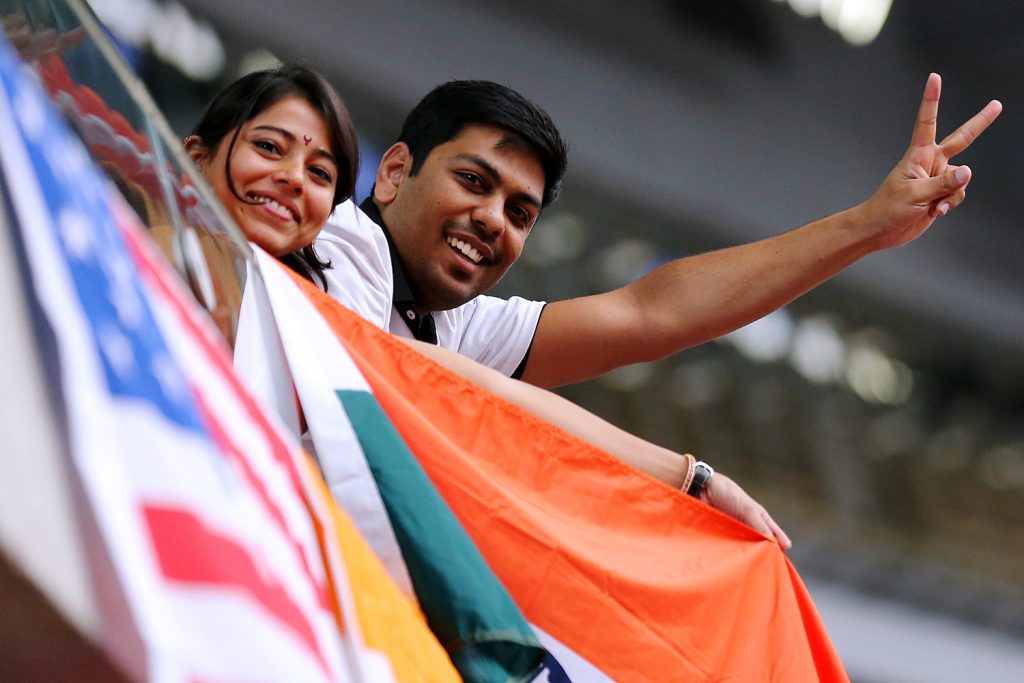
LOS ANGELES:- As the November 3 midterm elections approach, Indian American voters who supported the Republicans in the 2024 presidential election are showing signs of shifting toward the Democrats, driven by rising anti-immigrant, hate-filled rhetoric.
A recent survey conducted by the advocacy organization Indian American Impact reveals that approximately 25% of Indian Americans who voted for President Donald Trump in 2024 now plan to support Democratic candidates in the upcoming midterm elections.
A survey indicates that Democrats hold a lead among potential Indian American voters, with approximately 66% supporting the party.
Chintan Patel, Executive Director of Indian American Impact, stated that dissatisfaction with Republican rhetoric and concerns regarding discrimination are influencing political attitudes within the community.
Chintan Patel says, “There is a large segment of Indian American voters who—for lack of a better term—are experiencing ‘buyer’s remorse.’ Concerns regarding hate and discrimination are also growing throughout the community.”
The survey indicates that Indian American voters prioritize the cost of living and healthcare among economic issues.
This conclusion follows a survey conducted by the Carnegie Endowment for International Peace in February, which showed that seven out of ten Indian Americans disapproved of Trump’s performance.
However, the Carnegie survey also indicated that the Indian American community’s affiliation or identification with the Democratic Party has declined. In the 2024 presidential election, approximately one-third of Indian American voters supported Trump.
The Indian American population is estimated to be around 5.2 million, which is slightly more than 1.5 percent of the U.S. population.
Mittal says, “They have concluded that there is no price to pay for portraying Indian immigrants as ‘outsiders’ or for making statements suggesting that they are not a good fit for American culture.”
In Texas, where a high-stakes and expensive U.S. Senate race is underway, leaders within the Indian American community note that dissatisfaction with the Republican Party’s messaging and campaign style is becoming increasingly apparent.
According to Rishi Bhutada, a Houston-based businessman and board member of the ‘Hindu American Foundation,’ some voters who previously supported the Republicans have indicated that they intend to cast their ballots for Democratic candidates.
Bhutada says, “I met some people who said they would vote for Democratic candidates for every office. In doing so, they want to send a message to the Republican Party that they will no longer tolerate such behavior.”
Leaders within the Indian American community have expressed concern that the Republican Party’s hostile political rhetoric could lead to an increase in discrimination and violence against South Asian Americans.
Most Indian-Americans believe that recent events—such as the alleged plot to attack a Hindu temple in Aurora, Illinois, and the stabbing of a Sikh truck driver, Gurwinder Singh, in Wyoming—could influence the upcoming election.
Patel has warned that the alleged plot in Illinois could have resulted in mass casualties. “We could be talking about a major tragedy.”
A potential shift among Indian American voters could influence election outcomes in many competitive congressional districts and states.
Districts with significant Indian American populations include New Jersey’s 7th Congressional District and Pennsylvania’s 1st Congressional District—both of which are considered opportunities for the Democratic Party to flip the seat.
Indian American voters could also play a role in closely contested races in Georgia and Michigan, where even a relatively small shift in voter turnout or party preference could influence election outcomes.
A political debate has emerged as Indian American lawmakers continue their efforts to highlight the community’s contributions to the United States.
On Monday, Democratic Representative Raja Krishnamoorthi announced a bipartisan Congressional initiative to recognize Indian American heritage.
Krishnamoorthi stated that he is leading 256 bipartisan co-sponsors on a proposal to designate July as Indian American Heritage Month.
Welcoming the resolution, the Hindu American Foundation stated that it is “proud to support this bipartisan resolution.”
As the November 3rd election day approaches, the growing inclination of Indian-American community leaders toward the Democratic Party suggests that their votes could lead to the defeat of Republican candidates in key swing states.