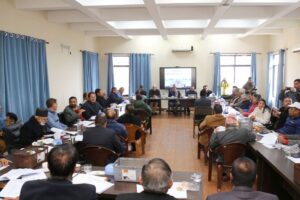
Report of the task force to prepare ‘Constitutional Amendment Debate Paper’ submitted to the Prime Minister
A report—complete with an executive summary—has been prepared by categorizing the suggestions derived from the study of historical documents related to Nepal's constitution-making, reports from Constituent Assembly committees, and national and international practices and precedents into twenty distinct thematic areas.
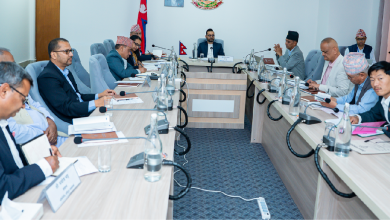
KATHMANDU:- The task force responsible for preparing the ‘Constitution Amendment Discussion Paper’ has submitted its report to the Office of the Prime Minister and Council of Ministers.
The Prime Minister’s Secretariat stated that the task force, formed under the coordination of Asim Shah—political advisor to Prime Minister Balendra Shah—submitted its report today.
Point No. 4 of the 100-point agenda on governance reform, issued by the government formed on Chaitra 13, 2082 BS, states that the Office of the Prime Minister and Council of Ministers shall—within seven days—form a task force to prepare a “Constitution Amendment Discussion Paper” aimed at building national consensus on issues such as long-term political and institutional reforms and the electoral system, and shall ensure that the discussion process is participatory, transparent, and evidence-based.
Accordingly, the Council of Ministers formed the said task force on Chaitra 16, 2082. The task force commenced its work on Chaitra 25, 2082, and has submitted its report today, having fulfilled its mandate within the extended timeframe (specifically, the second extension). In the process of preparing the report, the task force held 22 formal meetings as well as various informal ones.
In the process, direct discussions were held with 184 experts, including former presidents, former prime Ministers, leaders of various political parties, constitutional experts, legal experts, former judges, former attorneys general, former law secretaries, former administrators, women active in various sectors, media personnel, and representatives of the private sector.
Additionally, written suggestions were sought from over 150 organizations, including constitutional bodies, the Office of the Attorney General, provincial and local governments, the Nepal Bar Association, and various religious institutions. Following a public notice posted on the website, a total of 44,613 digital suggestions were received via email and WhatsApp from Nepalis residing both within the country and abroad. Suggestions were also collected through telephone and other electronic means.
A report—complete with an executive summary—has been prepared by categorizing the suggestions derived from the study of historical documents related to Nepal’s constitution-making, reports from Constituent Assembly committees, and national and international practices and precedents into twenty distinct thematic areas.