Agreement with India on Air Routes: Path Cleared for Operation of Bhairahawa and Pokhara Airports
Matters concerning entry points, flight altitudes, air traffic management, safety standards, and operational procedures need to be finalized and published in the Aeronautical Information Publication (AIP) of both countries. Only then will international airlines be able to utilize the new routes.
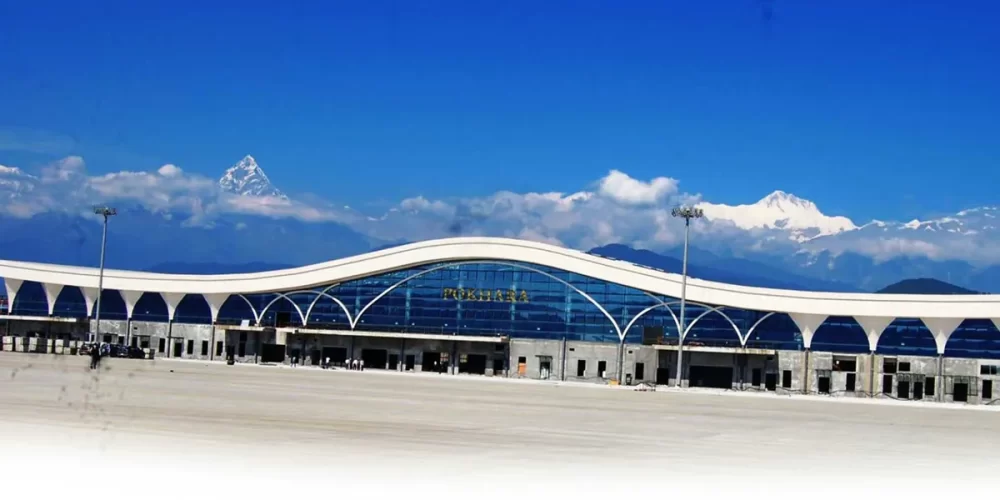
KATHMANDU:- A significant diplomatic milestone, long awaited by Nepal’s international aviation sector, has been achieved. An agreement has been reached between Nepal and India regarding the provision of additional air entry routes—a request Nepal had been pursuing for over a decade. This development is expected to provide fresh momentum to Nepal’s efforts to establish the Bhairahawa and Pokhara international airports as effective hubs for international flights.
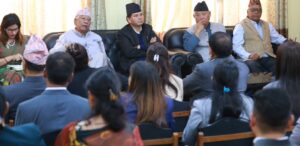
During the state visit to India by Prime Minister Balendra Shah on Mangsir 6 and 7, an agreement was reached between Nepal and India to provide additional air entry routes for international flights. A joint statement issued following bilateral talks between the Prime Ministers of the two countries mentions that the Kathmandu–Bhairahawa–Lucknow air route—currently operating on a one-way basis—will be converted into a two-way route.
Point 8 of the joint statement reads, “Both sides have agreed to make the B345 Kathmandu–Bhairahawa–Lucknow air route—which is currently one-way—two-way. In this regard, technical consultations will be held to finalize the modalities and to address other civil aviation-related proposals from both sides that are currently under discussion.”
This agreement is viewed as a significant achievement for Nepal’s civil aviation sector. This is because Nepal—which has historically relied on limited entry routes for international flights—now has the prospect of gaining additional options for aircraft to enter and exit the country from the western region as well.
Technical Team Begins Work
Following an agreement with India, Nepal has initiated the necessary technical preparations to implement a new air route. According to the Civil Aviation Authority of Nepal (CAAN), a joint technical team has already commenced work related to the operation of the route.
Details such as the geographical point at which the new air route will enter Nepal, the altitude of the aircraft, and the procedure for the handover of aircraft from India to Nepal will be determined through technical discussions.
According to a high-ranking official at CAN (Civil Aviation Authority of Nepal), the Nepali side has already begun the necessary preparatory work, and preparations are underway to send a proposal to the Indian side for a joint meeting. He stated, “The joint technical team has already commenced its work. The technical teams from both countries will finalize the specific entry point for the air route, as well as the altitude at which aircraft will be handed over from India to Nepal.”
Technical discussions will finalize the route’s definitive configuration, flight operation procedures, altitude determination, and air traffic management arrangements. Subsequently, the necessary information will be published in the Aeronautical Information Publication (AIP) of both countries.
The new air route will formally come into operation once the Civil Aviation Authority of Nepal and the Airports Authority of India publish the relevant information in their respective Aeronautical Information Publications (AIP). Therefore, even though an agreement has been reached at the political level between the two countries, technical and administrative procedures must be completed before passenger and other international aircraft can utilize the new route.
Expectation of reduced congestion at Kathmandu Airport
It is expected that the operation of a new air entry route will facilitate flight management at Tribhuvan International Airport, Nepal’s primary international airport.
Currently, most international aircraft entering Nepal are required to use the Simara entry point in Bara. Due to this reliance on a limited number of entry routes, aircraft arriving from the western region are unable to utilize shorter and more convenient paths as needed.
Once the Bhairahawa route becomes two-way, aircraft entering Nepal from the west will have an additional option. This will help reduce flight distances and travel time. Furthermore, it is expected to assist in managing congestion on international air routes and minimizing the need for aircraft to remain in a ‘holding pattern’ in the air for extended periods.
Jayanarayan Acharya, Joint Secretary at the Ministry of Culture, Tourism and Civil Aviation, stated that securing additional air entry routes is a significant achievement for Nepal’s aviation sector. According to him, this will enhance the utilization capacity of Nepal’s airspace and improve the efficiency of flight operations. It will facilitate smoother aircraft movement, reduce fuel consumption, save time and costs for passengers, and also have a positive impact on the arrival of foreign tourists.
“Securing additional air routes is a major achievement for Nepal. Some technical tasks remain to be completed to finalize this. Once the technical teams from both countries conclude these details, it will come into effect,” he stated.
The Key Basis for Operating Bhairahawa and Pokhara Airports
The primary objective behind Nepal’s request for additional air entry routes is to ensure the effective operation of the Bhairahawa and Pokhara international airports.
The state has made a significant investment in the construction of Gautam Buddha International Airport and Pokhara International Airport. However, even though construction has been completed and the airports have come into operation, regular international flights have not expanded as expected at either facility. A primary reason cited for this is the lack of convenient entry and exit routes connecting to Indian airspace.
The use of Indian airspace is crucial for conducting international flights from the Gautam Buddha International Airport in Bhairahawa. The lack of convenient entry and exit routes via India has posed challenges to the airport’s commercial operations.
With the Bhairahawa route becoming two-way, it is expected to become significantly easier for international aircraft arriving from the west to enter Nepal and depart after their flights. This could particularly assist in managing flights arriving from Western countries.
Similarly, convenient air connectivity is essential for expanding international flights from Pokhara International Airport. It is expected that the availability of a shorter route for aircraft entering Nepal from the western region will make it easier to integrate Pokhara into the international air network.
In this process, it is reported that India has agreed to allow aircraft to enter at an altitude of 39,000 feet via Mahendranagar. This is viewed as another significant opportunity for managing air entry into Nepal from the west. Furthermore, India has appeared positive regarding the provision of air routes at lower altitudes via Bhairahawa and Janakpur. However, a final decision on these matters is yet to be reached.
Nepal had been proposing the implementation of air entry routes that could be made operational immediately, while suggesting that remaining issues be resolved gradually through negotiations. India, however, sought an understanding based on a comprehensive package, rather than addressing various air routes and civil aviation-related proposals individually.
Along with the provision of an air route to Nepal via Bhairahawa, India had also proposed an air route connecting to Bagdogra Airport. Under the latest agreement between the two nations, it has been decided to advance these matters through technical consultations.
Reduction in flight time and operational costs
Ratish Chandra Lal Suman, former Director General of the Civil Aviation Authority of Nepal (CAAN), has stated that the establishment of a two-way air route via Bhairahawa represents a significant achievement for Nepal’s aviation sector.
According to him, if aircraft entering Nepal from the west are able to use a new route, flight times will be reduced. This will have a positive impact on flight duration, fuel consumption, and operational costs. “Currently, there is a one-way air route at Bhairahawa. If it becomes a two-way route, the time taken for aircraft entering Nepal from the west will decrease. It will also reduce congestion on international air routes, lower flight hours and the number of flight cycles, and assist in managing flight congestion at Kathmandu Airport,” he stated.
He emphasized the need to prioritize the implementation of the agreement. Reducing flight duration and fuel consumption is economically significant for airline companies. It is expected that this could encourage international airlines to operate flights to Nepal’s regional airports.
Furthermore, with fewer instances of aircraft having to hold in the air for extended periods, passenger travel time will be reduced, and flight regularity could improve.
A decade of diplomatic efforts bears fruit
For over a decade, Nepal had been making persistent diplomatic efforts to secure additional air entry routes from India. The issue of air routes had frequently been raised as a priority during visits to India by Nepali Prime Ministers and in high-level bilateral talks. However, a concrete agreement could not be reached due to differences regarding technical matters, security sensitivities, and the management of airspace.
Although Nepal has made significant investments in the construction of international airports, it has consistently raised the point that seamless access to Indian airspace is essential for the effective operation of these airports.
Discussions regarding air routes—which had been stalled for a long time—yielded positive results after the issue was raised as a priority during Prime Minister Shah’s visit to India. For Nepal, this agreement is not merely about securing a new air route; it is also linked to expanding international air connectivity, ensuring the commercial utilization of regional airports, and promoting tourism.
The recent agreement between Nepal and India has created new possibilities for Nepal’s aviation sector. However, to realize the actual benefits, the necessary technical and administrative procedures must be completed promptly.
Matters concerning entry points, flight altitudes, air traffic management, safety standards, and operational procedures need to be finalized and published in the Aeronautical Information Publication (AIP) of both countries. Only then will international airlines be able to utilize the new routes.