Nepal’s demand: Victims of climate disasters should receive grants, not loans
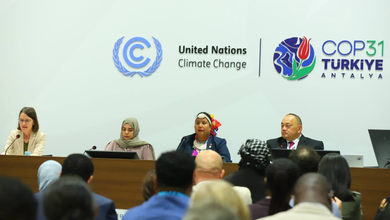
Antalya (Türkiye):- Minister for Agriculture, Forestry, and Environment, Geeta Chaudhary, has emphasized that countries affected by or at risk from climate change should receive support through the ‘Loss and Damage Fund’ in the form of grants rather than loans.
Speaking today at a high-level event held as part of the ongoing United Nations Climate Change Conference (COP-31) in Türkiye, she urged the international community to provide timely, accessible, and adequate financial assistance to communities impacted by the climate crisis.
Speaking at an event focused on “Access, Availability, and Affordability of Loss and Damage Finance,” Minister Chaudhary stated that although Nepal’s contribution to climate change is less than 0.1 percent, the country has suffered significant human and economic losses due to it.
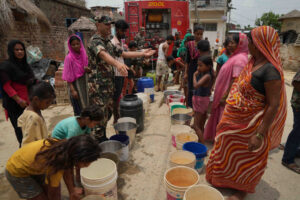
Referring to the devastating floods that struck the Bhotekoshi region on August 26, he noted that approximately 1,500 people died and over 5,000 went missing; he further explained that this disaster obliterated settlements, communities, and the foundations of livelihoods in less than seven minutes.
He informed that, due to this disaster, economic assets equivalent to approximately 10 percent of Nepal’s Gross Domestic Product (GDP) were lost within just a few hours, and that resources amounting to 20 percent of the GDP might be required for recovery and resilient reconstruction.
“Loss and damage is not merely a subject of policy debate for us. It represents a funeral, a lost home, a vanished future, and a destroyed civilization,” said Minister Chaudhary.
Noting that the impacts of climate change are not limited solely to floods and landslides, he stated that the dengue outbreak in the Terai, the effects on women’s health and dignity, and the erosion of the cultural heritage of indigenous peoples also constitute climate-related damage.
Minister Chaudhary expressed his gratitude to the Board members and the Secretariat of the Loss and Damage Fund for convening an extraordinary meeting—the first of its kind—at a time when Nepal is mourning a disaster, and for deciding to provisionally allocate 21.6 million US dollars for the affected people of Nepal. However, he noted that this amount is insufficient relative to the actual needs.
He also informed that Nepal will submit a proposal to the Fund—grounded in national ownership, transparency, and the needs of affected communities—immediately following the conclusion of COP-31.
Highlighting three key challenges regarding the mobilization of loss and damage finance, he clarified that delays in financial support equate to a lack of access; that the Fund’s commitments cannot be effective without adequate capitalization; and that the burden of debt must not be imposed upon the victims of climate-related disasters.
“We cannot accept a world where victims of climate change are forced to take on debt to pay for the funerals of their own loved ones,” he said. He urged the developed nations—as parties to the agreement—to immediately provide the remaining committed funds and to establish financial arrangements that are adequate, predictable, science-based, and aligned with actual needs.
Meanwhile, Minister Chaudhary announced that a board meeting of the Loss and Damage Fund will be held in Nepal in March 2027, and extended an invitation to the board members and partners to visit Kathmandu.
Drawing lessons from Nepal’s experience with disasters, he emphasized the need to ensure that financial support for loss and damage is easily accessible, adequate, affordable, and promptly available. He further stated that the international community should be evaluated based on actual achievements rather than on commitments made.