
Chhath festival begins today, Mithila region celebrating Chhath
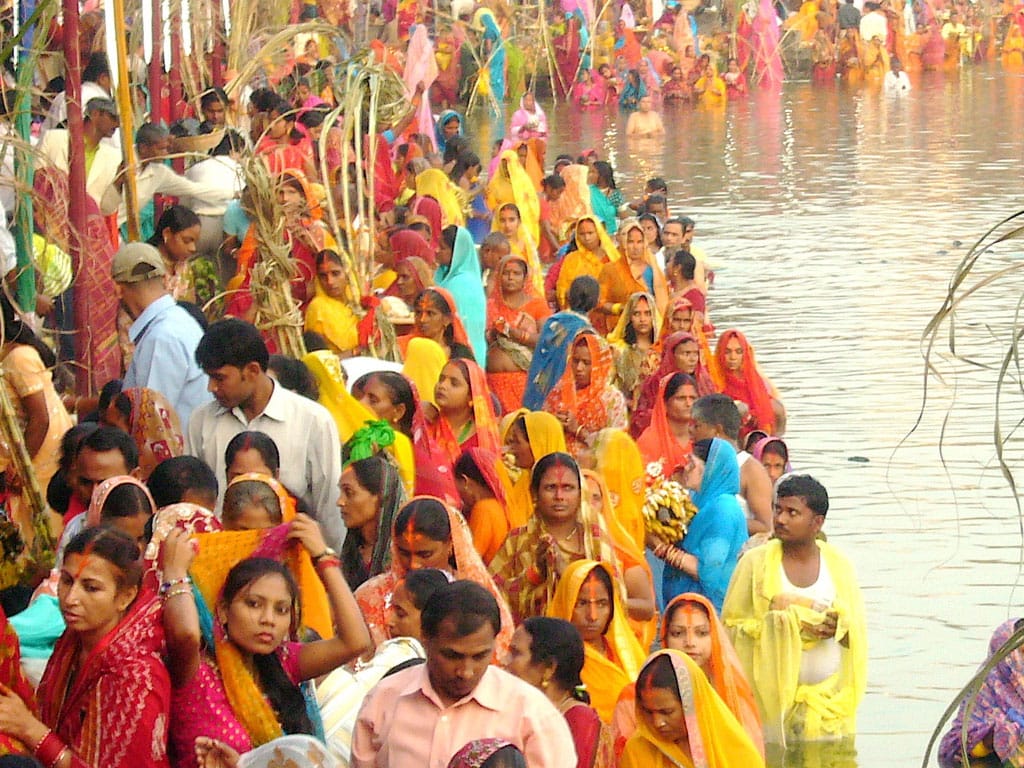
In the Mithila region, the Chhath festival is celebrated over four days, from the fourth to the seventh day of the bright fortnight (Shukla Paksha) of the month of Kartik. The festival begins on the first day with the ‘Nahay-Khay’ ritual, followed by ‘Kharna’ on the second day. On the third day, those observing the fast offer *arghya* (oblations) to the setting sun, and the festival concludes on the morning of the fourth day after offering *arghya* to the rising sun. During the Chhath festival, people set aside past grievances, gather together, and worship the Sun God.
MAHOTTARI:- With the conclusion of the Deepawali festival, the Chhath festival—which begins today, on the fourth day of the bright fortnight of the month of Kartik (Kartik Shukla Chaturthi)—has brought a surge of activity to the villages, settlements, and marketplaces across the Mithila region, including Mahottari. Local residents are now fully engaged in preparations for this four-day-long festival.
As Chhath is a festival rooted in faith, devotion, and dedication, traditional Chhath songs have begun to resonate in households throughout the Mithila region. The atmosphere across Mithila has become imbued with the spirit of Chhath, filled with devotional songs that extol the glory of the Sun God (Surya Dev) and Goddess Shashthi (Chhathi Maiya).
In preparation for the festival, local residents are engaged in cleaning and constructing *Chhath ghats* (ceremonial sites) along riverbanks, ponds, and other water bodies of religious significance. Young people, in particular, are actively involved in building and decorating these sites. Houses—constructed using bamboo poles and twigs—are being plastered, painted, and decorated. Decorative lights have been installed along streets, on homes, and in public spaces. Everyone, regardless of their economic status, is preparing to celebrate the festival with deep devotion and sincerity, according to their own means.
With the preparations for Chhath underway, the daily lives of the local residents have also come to revolve around the festival. Haridev Mahato, Principal of Janata Secondary School in Bijalpura, Bardibas-13, stated that everything—from social interactions and conversations to household chores—has begun to center on the preparations for Chhath.
Markets in the Mithila region are crowded with people purchasing items for the Chhath festival. Sales of essential festival goods, including bunches of bananas, have increased. Local farmers are preparing to bring items used in Chhath rituals—such as sugarcane stalks, ginger, turmeric plants, bundles of greens, *jhamir* (a type of citrus fruit), and various other traditional offerings—to the market. Shivchandra Chaudhary, President of the Jaleshwor Chamber of Commerce and Industry, stated that the sale of these items is expected to peak on Saturday.
Similarly, sales of bamboo-crafted items—such as *dhaki*, *daliya*, *koniya*, *nanglo*, *chalno*, and *pankha* (fans)—have increased in the weekly markets; these are used for holding *Chhath* ritual offerings and for various other purposes. There has also been a rise in the market for earthenware, including *diyo* (lamps) for lighting, *chhyanchi* (vessels for setting yogurt), *taula* (containers for ritual items), and *ankhara* or *gagri* (vessels for storing water). The demand for these bamboo and earthen items has grown due to the tradition of placing *Chhath* ritual offerings in new vessels.
There is a growing bustle in every household as preparations for *Chhath* offerings (*prasad*) get underway. Homemakers are busy preparing these offerings, which include *thakuwa* and *bhusuwa*. The traditional practice of pounding rice and grinding wheat flour at home—using implements like the *dhiki* (treadle-operated husking lever) and *janto* (hand-operated millstone)—still persists. Since this festival places immense emphasis on purity and sanctity, the *prasad* is prepared with the assistance of family members. *Mithilani*—the women of the Mithila region—are currently occupied with preparing rice and wheat flour for the festival. Shanti Devi Sah, a 55-year-old resident of Ramnagar in Bhangaha-4, noted that *nishtha* (devout dedication and strict adherence to purity) is the most crucial aspect of *Chhath* preparations.
In the Mithila region, the Chhath festival is celebrated over four days, from the fourth to the seventh day of the bright fortnight (Shukla Paksha) of the month of Kartik. The festival begins on the first day with the ‘Nahay-Khay’ ritual, followed by ‘Kharna’ on the second day. On the third day, those observing the fast offer *arghya* (oblations) to the setting sun, and the festival concludes on the morning of the fourth day after offering *arghya* to the rising sun. During the Chhath festival, people set aside past grievances, gather together, and worship the Sun God.
At the Chhath *ghat* (riverbank site), there is a tradition of celebrating the festival with everyone sitting in a single row, without any discrimination based on caste or community. Local residents believe that participating in the preparations for the festival—driven by religious faith—fosters humility and a spirit of cooperation among people. It is a widely held belief that this festival, which involves the worship of the Sun God (Surya Dev) and the Goddess Shashthi (Shashthi Devi), brings about well-being and prosperity.