Governor Newsom announces nearly $1.3 billion for cleaner transportation, stronger transit connections
Caltrain’s downtown San Francisco extension forward and bring more than 75 zero-emission buses and smaller transit vehicles to California communities.
The 28 awards are through the California State Transportation Agency’s Transit and Intercity Rail Capital Program (TIRCP) and State Rail Assistance program and help prevent major Metrolink service cuts in Southern California, advance Caltrain’s extension into downtown San Francisco and bring more than 75 zero-emission buses and smaller transit vehicles to communities across the state. The investments connect California’s climate goals with everyday needs: dependable transportation to work, school, and other destinations.
Governor Gavin Newsom said, “California has shown that investing in cleaner transportation can improve people’s everyday lives. These investments build on that progress, funding cleaner buses, better rail connections, and the train service families count on to get to work and school. As we take California’s experience to the world stage, we’re continuing to build a cleaner, more connected state.”
“California is turning big transit ideas into everyday trips,” said California Transportation Secretary Toks Omishakin. “From Caltrain’s extension into downtown San Francisco to clean buses in the Central Valley and tap-and-pay fares across Metrolink, these awards make transit cleaner, faster and easier for riders across the state.”
Connecting more Californians to jobs, schools, and communities
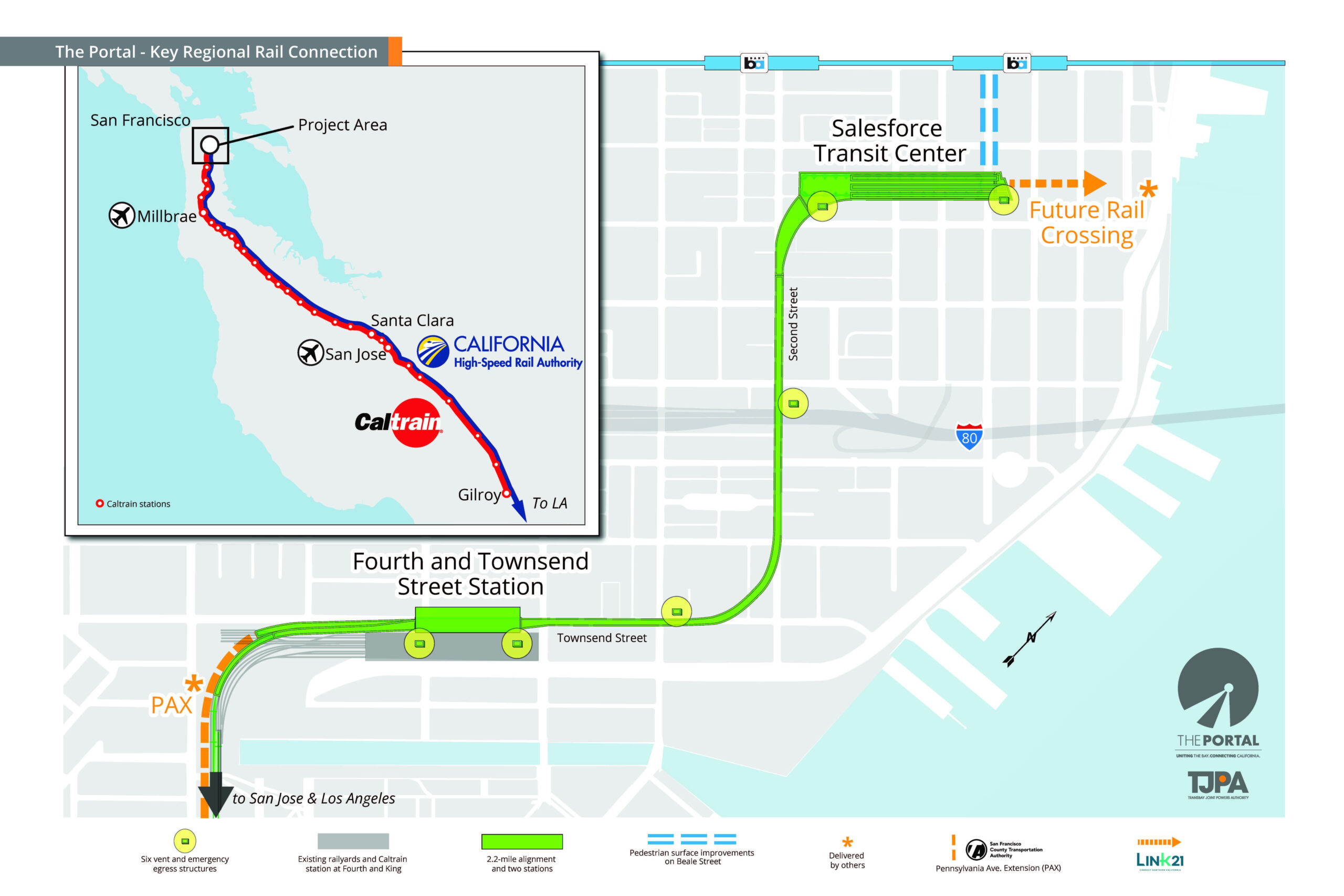
In the Bay Area, a $750 million investment will advance The Portal, a major project that will extend Caltrain approximately two miles from Fourth and King streets into downtown San Francisco.
Led by the Transbay Joint Powers Authority, the project will connect Caltrain to the Salesforce Transit Center, creating a major regional transit connection and establishing the future San Francisco terminus for California high-speed rail. The state’s investment builds on local and regional funding commitments as the project advances through the Federal Transit Administration’s Capital Investment Grant program.
Other projects expanding transportation connections across California include:
Central Valley: Modernizing transit facilities and introducing battery-electric buses in Kings County to connect communities to future high-speed rail service, while expanding zero-emission microtransit options in Merced County.
In Santa Monica, new battery-electric buses will complete the transition of the city’s Big Blue Bus fleet to all-electric vehicles. Additional zero-emission buses will serve communities in Sacramento, Kings County, Marin County and Montebello, while Merced County will expand cleaner microtransit options.
The awards will also make transit more convenient, including introducing tap-to-pay fares using a bank card or phone across Metrolink, improving access at Downtown Burbank Station and modernizing California’s statewide bi-level intercity passenger rail fleet.
Other projects include new track and safety infrastructure for Caltrain, pedestrian safety improvements at SMART’s Ward neighborhood rail crossing, and planning to improve service along the Los Angeles–San Diego–San Luis Obispo rail corridor ahead of the 2028 Olympic and Paralympic Games.
In Southern California, a $20 million investment will help Metrolink avoid proposed service reductions of 29% on weekdays and 40% on weekends compared with its 2025 schedule. The funding will help maintain service for workers, students and families through summer 2028, as the region prepares to host the LA28 Olympic and Paralympic Games.
The investment comes with an expectation that Metrolink and its member agencies will work with the state to identify long-term solutions to the system’s funding challenges.
Additional investments will help maintain existing COASTER commuter rail service in San Diego County and improve reliability along some of California’s busiest passenger rail corridors.
Projects include replacing aging railroad signals and infrastructure near Davis Station to reduce disruptions along the Capitol Corridor, constructing new rail infrastructure in Santa Clara County to improve passenger and freight rail operations, and upgrading signals and communications along the SPRINTER rail line between Oceanside and Escondido.
“We are grateful to Governor Newsom, Secretary Omishakin and the State of California for recognizing the essential role Metrolink plays in connecting Southern California’s communities,” said Metrolink CEO Darren Kettle. “This critical investment helps us maintain the service our riders depend on to get to work, attend school and access opportunities throughout the region. It also provides much-needed stability as we work with the state and our member agencies to build a more sustainable future for regional rail. Reliable, accessible transportation is vital to our region’s economic health and quality of life, and this funding helps ensure we can continue delivering on that commitment.”
Since 2015, TIRCP has awarded more than $12.7 billion to 171 projects statewide, supporting improvements that expand transit service, increase ridership, improve safety and reduce greenhouse gas emissions.
An additional $66.5 million in State Rail Assistance funding will support eight projects that protect existing passenger rail service and improve rail safety, reliability, and operations.
Both programs receive funding through Senate Bill 1, the Road Repair and Accountability Act of 2017. TIRCP also receives funding through California’s Cap-and-Invest program and is part of California Climate Investments, which puts Cap-and-Invest dollars to work reducing greenhouse gas emissions, strengthening the economy and improving public health and the environment.
Together, these investments help preserve the transportation Californians rely on today while building cleaner, more connected communities for the future.
Transportation and innovation. The California State Transportation Agency oversees more than $12 billion in annual transportation funding across eight state agencies — delivering roads, bridges, rail, transit, and zero-emission infrastructure to every corner of the state. The California Transportation Commission allocates an additional $10 billion annually for transportation projects. Caltrans manages more than 50,000 miles of highway, and recently launched Traffic Mobility Insights, an AI-powered platform that unifies seven statewide traffic systems, refreshes highway bottleneck detection every 25 minutes, and can generate emergency evacuation routes in minutes during wildfires or earthquakes.