NRNA Japan’s ‘Nepal House’ construction project in controversy
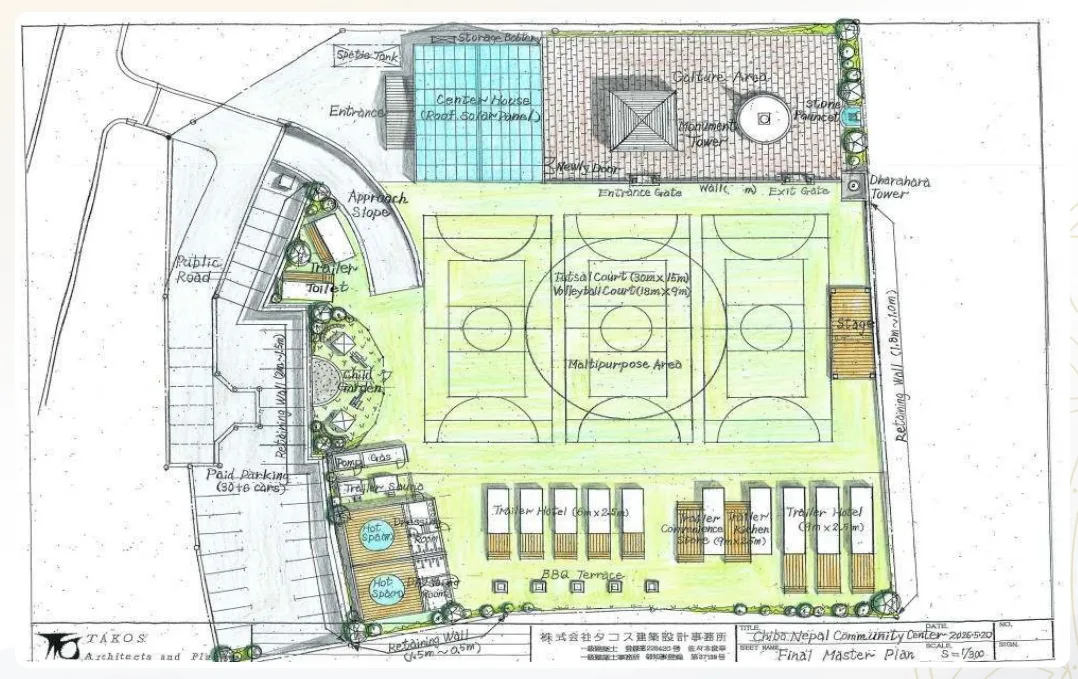
TOKYO:- The highly anticipated ‘Nepal House’ construction project, spearheaded by the Non-Resident Nepali Association (NRNA) Japan, has become embroiled in controversy. The dispute arose after it was discovered that the land selected for the project—for which the procurement process had already begun—was actually designated for use as a burial ground.
Following questions raised regarding the lack of transparency in the land acquisition process for ‘Nepal House’, an 11-member investigation and monitoring committee—coordinated by Deepak Kandel—was formed on October 4.
Following discussions with Japanese government agencies, legal professionals, real estate experts, and other stakeholders—as well as conducting on-site assessments—the committee has prepared a report and submitted it to NRNA Japan. The investigation committee’s report has revealed that NRNA Japan paid a deposit of 45 million Japanese Yen to a company that held no legal ownership of the land in question.
The committee concluded that the land in question—located at 1647-1 Takada-cho, Midori-ku, Chiba City—is not developable vacant land, but rather a site currently being used for religious purposes. The report states that an on-site inspection revealed the presence of 96 individual and family graves, a site for the interment of cremated remains, and a prayer hall (Hondo).
Furthermore, the committee has concluded that, since the area falls under a zone where urban development is restricted—in accordance with Japan’s City Planning Act—there are legal obstacles preventing non-religious organizations or foreign communities from constructing a multi-purpose building like ‘Nepal House.’
The report states that the most significant financial risk in the land acquisition process lies in the payment of the earnest money (deposit). The organization had entered into a preliminary agreement with a company named ‘Senos’ for the purchase of land and paid 45 million Japanese Yen. However, the committee revealed that, upon investigation, it was found that the company held no legal ownership of the land; instead, the land has been registered under the name of a religious organization called ‘Josenji’ since 2014.
The committee has concluded that paying a deposit amounting to approximately 48 percent of the total value—set at 92 million yen—to a third party who held no ownership of the land constitutes a serious financial risk. The report also notes that, in Japanese real estate transactions, it is customary to pay a deposit of only 5 to 10 percent.
The controversy surrounding the ‘Nepal House’ project began as early as the previous term. The executive committee, led by former president Nabin Nyure, had previously purchased land in Kawato-cho for approximately 33 million yen. However, the committee’s report states that the land remains unused due to issues concerning its nature, environmental disputes, and the inability to obtain construction permits.
Following difficulties in utilizing the existing land, the executive committee led by the current chairperson, Subas Lamichhane, initiated the process of purchasing new land. However, the committee has concluded that the statement issued by the organization—which claimed that the new land was acquired through an exchange for the old land—is factually inaccurate, as it concealed the true nature of the new land. The report further notes that an attempt was made to create confusion by specifying a different plot number during the tender invitation process.
The report states that members of the investigation committee faced threatening behavior when they met in person with representatives of the Senos company to request a refund of the paid amount. The committee claims that a director of the company gave an irresponsible response, stating, “Not a single penny will be refunded; go wherever you like—to the police or the courts.”
The committee has recommended the immediate cancellation of agreements made with parties lacking legal standing, noting that the funds—painstakingly collected by Nepalis living in Japan—are now at risk. Furthermore, it has advised initiating legal proceedings regarding fraud and deception through a Japanese legal professional to recover the 45 million yen already paid, along with interest and compensation.
Meanwhile, NRNA Japan has stated that it has received the report from the investigation committee and will make its official position public after studying it thoroughly. President Lamichhane has also emphasized that the current priority is to resolve the issues. Furthermore, he affirmed that they are committed to constructing the ‘Nepal House’ with the consensus of all parties involved.
However, Lamichhane has claimed that there were no financial irregularities and that the organization’s funds remain secure. Speaking to Ratopati on Saturday morning, he asserted that no financial misappropriation took place during the land acquisition process. He stated that if it turns out to be technically or legally unfeasible to construct a building on the land, the project will be moved forward through an alternative approach.